What to Write in a Funeral Thank You Card
Find funeral thank you card wording for flowers, meals, donations, sympathy notes, and practical help, plus a gentle way to track every kindness with care.
A Simple Thank You Is Enough
Knowing what to write in a funeral thank you card can feel unexpectedly difficult. You may be handling service arrangements, answering messages, supporting relatives, and trying to rest while living with a profound loss. The National Institutes of Health Clinical Center notes that grief can involve fatigue, confusion, and difficulty concentrating. Those natural reactions can make even a short note seem like a large task.
One or two sincere sentences are enough. You do not need elegant stationery, perfect handwriting, or a different message for every person. A simple note that names the kindness and says what it meant will feel personal because it is true.
The wording below is meant to be adapted, not followed as a rigid set of etiquette rules. Change the greeting, shorten a sentence, or use the same basic message for several people. If you are still managing immediate decisions, our guide to what to do in the first 24 hours after a loss can help you separate urgent tasks from those that can wait. Thank you cards belong in the second group.
Key Takeaways
Keep it brief. One or two sincere sentences can communicate genuine gratitude.
Name the kindness. Mention the flowers, meal, donation, message, or practical help you received.
Share the writing. A relative or trusted friend can draft, address, or mail notes for the family.
Choose a manageable pace. Write when you have the capacity, even if that means completing a few cards at a time.
Record each gesture. Keep one simple list so gifts and completed notes are not missed or duplicated.
What to Write in a Funeral Thank You Card
A funeral thank you card can follow four simple parts: greet the person, name what they did, explain what it meant, and close warmly. This is consistent with the Emily Post Institute's suggested thank you note structure, which begins with a salutation, identifies the specific gift or act, and explains its meaning before a concluding thought and closing.
For a close friend
Dear Maya, thank you for sitting with us after the service and bringing dinner. Your steady presence made a hard evening feel less lonely. With love, Jordan.
For a coworker
Dear Alex, thank you for your thoughtful card and for helping cover my work while I was away. Having that time with my family meant so much. Warmly, Jordan.
For a group
Dear Lakeside team, thank you for the beautiful arrangement and the kind messages you shared. Your support brought comfort to our whole family. With gratitude, the Carter family.
For someone you do not know well
Dear Ms. Green, thank you for your kind note and for sharing your memory of Sam from the neighborhood garden. It was meaningful to learn how warmly you remembered him. Sincerely, the Carter family.
These examples do not need to be copied word for word. Keep the structure, replace the details, and let your natural voice do the rest.
Funeral Thank You Card Wording for Flowers
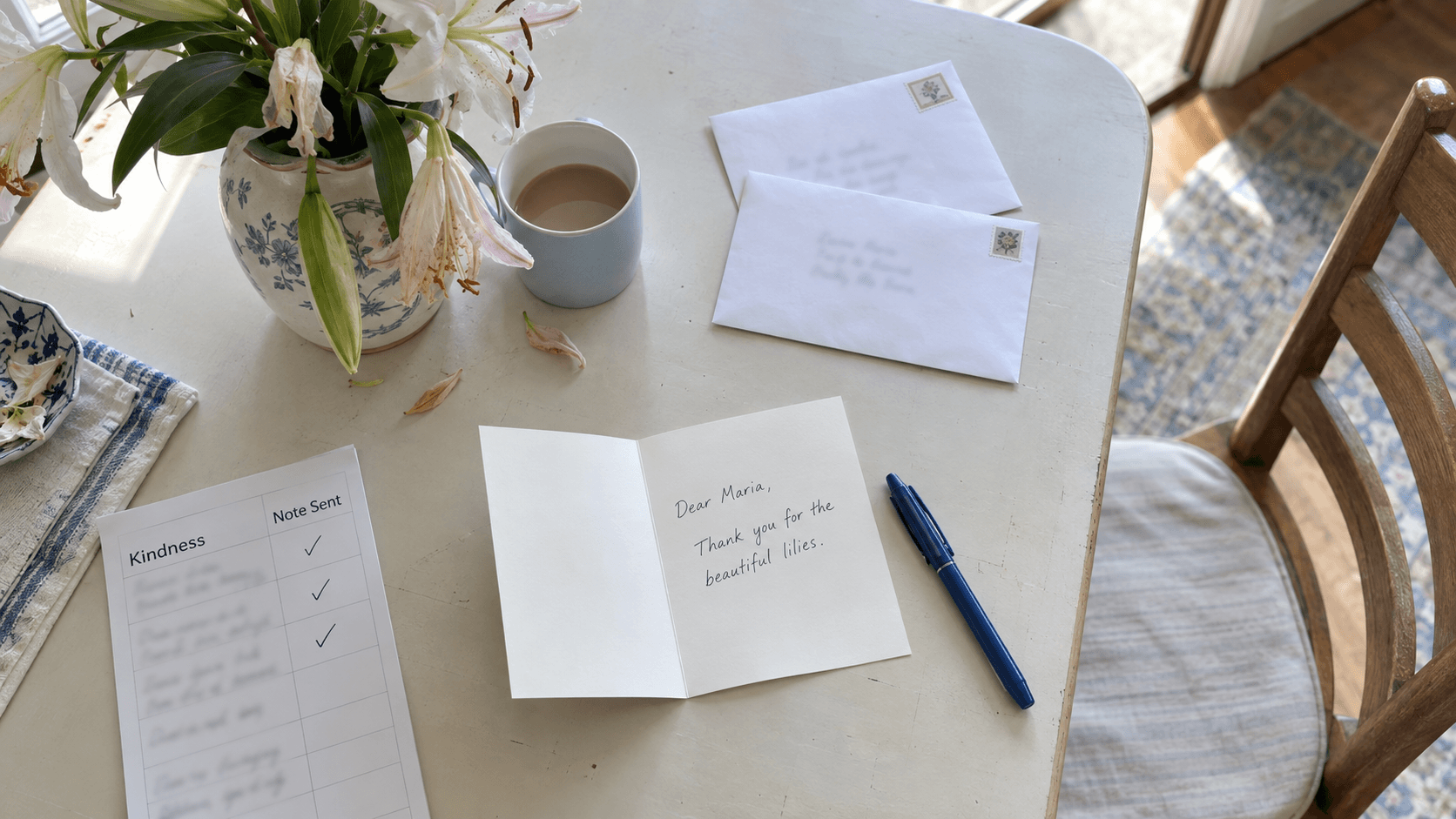
A direct message might say: Thank you for the beautiful white lilies you sent. Seeing them at the service brought warmth and comfort to our family. Naming the flowers or arrangement makes the note personal without requiring a long explanation.
Flowers sent to the service
Thank you for the lovely arrangement you sent for the service. Your thoughtful gesture helped the room feel welcoming and reminded us that many people were holding our family in their thoughts.
Flowers delivered to the home
Thank you for sending the bouquet to our home. Its color and fragrance brought a gentle brightness to a difficult week, and we appreciated your care.
A plant kept afterward
Thank you for the peace lily. We have placed it near the window, and caring for it has become a quiet reminder of your kindness.
Flowers and plants may arrive at several locations, so Emily Post recommends recording each delivery so its sender can be thanked. If you are sending flowers yourself, our guide to what to write on a funeral flower card offers short messages for individuals, families, and groups.
Thank You Wording for Food, Donations and Help
For food, donations, financial support, or practical help, mention the particular kindness and the difference it made. The examples below provide complete wording that can be shortened or combined.
Meals
Mention the dish, delivery, or meal schedule: Thank you for bringing the vegetable soup and fresh bread. Having a meal ready gave us one less thing to manage, and your thoughtfulness meant a great deal.
Memorial donations
Name the organization or cause, but you can leave out the amount: Thank you for making a memorial donation to the community food pantry in Elena's memory. Your gift honors the generous way she cared for her neighbors.
Financial help for the family
Acknowledge the support without explaining private expenses: Thank you for your generous support during this difficult time. Your kindness has helped our family manage the immediate days with greater peace of mind.
Transportation, childcare, and other practical help
Identify the task and how it eased the day: Thank you for driving Aunt Rosa to the service and staying with the children afterward. Your practical help allowed us to be present without worrying about the details.
The important detail is not the monetary value of the gesture. It is the care behind it and the burden it helped carry.
Thank You Notes for Sympathy Cards
You do not need to treat every sympathy card as a debt that must be repaid. A useful distinction is whether the sender added something personal. The Emily Post Institute says personally written notes, personal emails, flowers, contributions, and acts of kindness should be acknowledged when possible. Its guidance says a card containing only a printed message does not require a written acknowledgment.
For a personal memory
Thank you for sharing the story about Daniel helping you repair your porch. It made us smile and gave our family another memory to cherish.
For a letter or personal email
Thank you for taking the time to write such a thoughtful message. Your words about Priya's warmth and humor brought us comfort, and we will keep your letter with our family memories.
For online condolences
For a large number of online messages, one public response can express the family's thanks. You might write: Our family is deeply grateful for every message, memory, and expression of care. We have read your words and felt supported by them.
Respond according to your capacity. The purpose is to recognize care, not to turn kindness into another obligation.
How Soon to Send Funeral Thank You Notes
Write and send funeral thank you notes when you have the capacity. There is no need to abandon a meaningful note because the first days or weeks have passed. The Emily Post Institute advises writing thank you notes as soon as possible while reassuring readers that a late note is better than none.
A manageable rhythm may be more helpful than a target date. Set out three cards, write those, and stop. Return another day if you wish. If a longer delay makes you self-conscious, begin with a simple sentence such as, Your kindness has stayed with us, and I have wanted to thank you. You do not need to apologize or explain everything that prevented an earlier reply.
Who Writes the Thank You Notes
The closest bereaved person does not have to carry this task alone. A relative or trusted friend can help write, address, organize, or mail the cards, allowing the family to acknowledge each kindness without placing the entire responsibility on one person.
Ways to Share the Work
A helper may draft notes for the family to review, address envelopes, add stamps, or mail completed cards. They can sign the family's name, use "On behalf of our family," or say that the family asked them to express thanks. Choose wording that is honest and comfortable for everyone involved.
How to Keep Track of Who Sent What
Use one notebook or shared spreadsheet to record each kindness as it arrives. Create columns for the sender's name, contact details, what they sent or did, the date received, the person assigned to write, and the date the note was sent. Keep the list where the person answering the door, opening mail, or checking online messages can reach it.
Ask one trusted person to act as the recorder during the busiest days. Other relatives can send that person a quick message whenever food, flowers, donations, cards, or practical help arrive. A single recorder reduces the chance that two people will send duplicate notes while another kindness goes unrecorded.
Record the status of the thank you, not your judgment of the gift's value. Labels such as received, assigned, written, and sent make the next action clear. Rankings such as large, small, or important can create pressure and distract from the care each person intended.
If the list is being created alongside service plans, keep it separate from your schedule and readings. Our guide to understanding the funeral order of service can help organize that separate part of the planning. Keeping each list focused makes both easier to use.
Sincerity Matters More Than Perfect Wording
Your gratitude does not need polished prose, equal-length messages, or a perfect schedule. A specific sentence written with care will usually feel more personal than a long message written from a sense of obligation. It is also fine for one note to be warmer or longer than another because relationships and gestures differ.
When your energy is limited, protect it. A thank you list should support you, not measure how well you are grieving. Write a few cards at a time, and accept help with addresses, stamps, printing, or delivery.
Lovekept's free funeral thank you card maker can reduce the work of formatting and printing when you feel ready. Whether your message is handwritten, printed with a personal line, emailed, or sent by text, let it be simple and true.
The people who offered support were trying to make a difficult time a little gentler. Your acknowledgment can do the same. It only needs to say, in your own way, that their kindness was noticed and remembered.
Must everyone who attended the funeral receive a thank you note?
No. Emily Post's sympathy acknowledgment guidance says attendance alone does not require a written response. Focus your notes on personal messages, flowers, donations, meals, and other specific acts of care when you have the capacity.
Can I send a text or email instead of a handwritten card?
Yes. Use the method you can manage and that fits your relationship with the recipient. Emily Post describes handwritten notes as warmer and more personal while recognizing email as suitable for a quick expression of thanks. A sincere text can also suit someone with whom you normally communicate that way.
Is it ever too late to send a funeral thank you card?
No. Send the note when you are able. You can acknowledge the delay briefly if that feels natural, but an apology is not required. A simple opening such as, "I have carried your kindness with me and wanted to thank you," keeps the focus on gratitude rather than the calendar.
Should I mention the amount of a memorial donation?
You can thank the person without stating the amount. Name the organization or cause and explain why the gesture was meaningful. For example: "Thank you for donating to the animal shelter in Luis's memory. Your gift reflects the compassion he showed throughout his life."
What should I do if the sender's address is missing?
Ask a relative, mutual friend, faith community, or group organizer if they have current contact details. If an address remains unavailable, use a known email address or phone number. The message matters more than matching a particular format.
Can someone else write the funeral thank you cards?
Yes. The Emily Post Institute says a family member or friend may write acknowledgments when the list is long or the recipient is not up to the task. The helper can write transparently, "Maria asked me to express how much your support has meant to her and the family."
See How Families Preserve Meaningful Memories
Explore memorials to discover thoughtful ways families and friends gather stories, photographs, and messages of remembrance in one lasting place.
Explore MemorialsSources
- National Institutes of Health Clinical Center, Grief Dictionary
- The Emily Post Institute, Complete Guide to Writing Thank You Notes
- The Emily Post Institute, Sympathy Flowers
- The Emily Post Institute, Sympathy Notes and Letters
- The Emily Post Institute, Different Ways to Say Thank-You
Lovekept's guides are drafted with AI against briefs written by the Lovekept team. Abdullah Nabeel, the founder, is the blog's editor. Read how we produce and correct content at /editorial-standards.