What to Do With Funeral Flowers Afterward
Wondering what to do with funeral flowers? Learn who takes them home, how to dry, press, or set them in resin, where to donate them, and what to keep.
The service is over, the guests are drifting toward their cars, and the room is still full of sprays, wreaths, and potted plants. Someone has to decide what to do with funeral flowers, and the job often lands on a family member who is already running on empty. So here is the first thing to know: there is no wrong choice.
Some families keep a few blooms and press them into a frame. Others give arrangements to neighbors, send them to a care facility, or let them return to the earth in a compost bin. Each of these is a loving way to close the day, and you are free to mix and match.
The flowers are also a detail that tends to be overlooked until the last guest leaves. By then the blooms are starting to tire and the cards are scattered across a dozen arrangements. This guide walks through the choices in the order families usually face them: who takes the flowers home, how to dry, press, or frame a few, where to donate or compost the rest, how long graveside flowers stay, and what to keep from the ribbons and cards.
Key Takeaways
The immediate family decides. The funeral home will usually ask where the arrangements should go, so it helps to have an answer ready.
Choose what to keep within a day or two. Blooms you want to dry, press, or set in resin are best handled while they are still fresh.
Silica gel is a favorite for fuller blooms. Iowa State University Extension calls it probably the best drying material, with flowers drying in about 3 to 7 days.
Call before you donate. Some nonprofits and care facilities accept funeral flowers, but policies vary, so confirm first.
Remove foam, wire, and plastic before composting. Only the flowers and greenery belong in the compost. Floral foam goes in the trash.
Collect every card before an arrangement leaves the room. The cards are your record for thank-you notes, and graveside pieces are cleared on the cemetery's schedule.
Who Is Supposed to Take the Flowers Home?
The closest family members, usually whoever arranged the service, have first say. No formal rule decides who takes the flowers home, and you do not owe anyone a particular answer. If a relative would love the lilies and you would like to keep the peace lily, that is simply a conversation.
In practice, funeral home staff often ask the family before the service ends whether to send arrangements to the graveside, load them for the family, or offer them to guests. Plants and smaller vases tend to go home with relatives, while large standing sprays and wreaths usually travel to the grave.
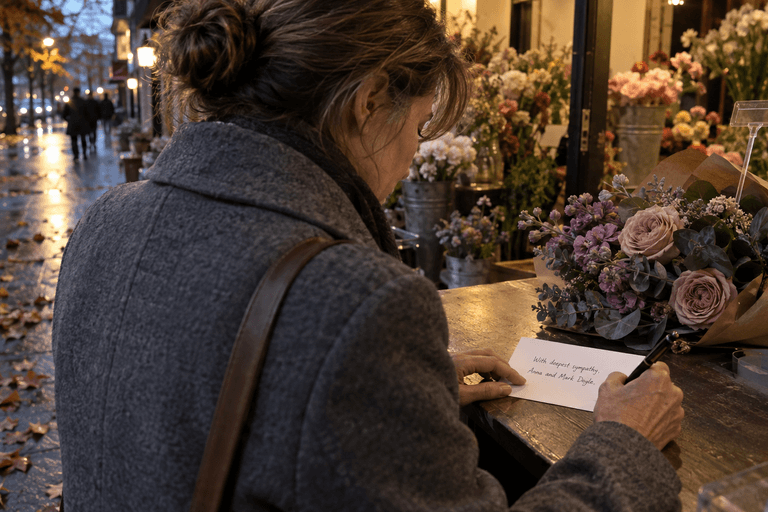
Here is the step many families skip: ask one trusted person ahead of time to look after the flowers. That person pulls every card before anything leaves the room and keeps it with a short note about the arrangement it came with. Cards that leave on an arrangement are a common reason families later cannot work out who sent what, which makes thank-you notes for funeral flowers much harder to write. A friend or cousin who is not in the front row of grief is often the best choice for this job.
Once you know where everything is going, you can decide which few blooms are worth keeping a little longer.
“There's rosemary, that's for remembrance; pray you, love, remember.”
How to Dry and Press Funeral Flowers
Drying or pressing a handful of blooms is the simplest way to keep something from the day, and it is also the first step for resin and shadow box keepsakes. Flat flowers and loose petals press well. Fuller blooms such as roses usually keep their shape better in a drying agent like silica gel. Whichever method you choose, work quickly, before the petals start to brown.
Drying and Pressing at Home, Step by Step
Choose the best blooms quickly
Within a day or two, pick the flowers at their best. Remove wire, tape, and floral foam, and skip any blooms that are already browning or damp.
Press flat flowers and petals
Lay flat flowers and petals between sheets of absorbent, non-glossy paper inside a heavy book. Stack more weight on top and leave them for several weeks without peeking.
Dry fuller blooms in silica gel
Put a layer of silica gel in an airtight container, set the flowers face up, and gently sift more gel around and over them until they are completely covered. Seal the lid tightly. Drying takes about 3 to 7 days.
Try borax and cornmeal on a budget
Equal parts borax and cornmeal is a cheaper drying mix. It takes about 1 to 2 weeks, and the container can stay uncovered.
Air dry grasses and sturdy blooms
Strip the foliage, bundle the stems, and hang them upside down in a warm, dark, dry, well-ventilated spot. Expect two to three weeks, and some fading in color.
Protect yourself
Wear a dust mask and gloves when handling silica gel, and keep it away from children and pets.
A few details make the difference between a keepsake and a disappointment. University of Missouri Extension's guide to drying flowers (G6540) warns that silica gel must sit in a tightly sealed container. If the lid leaks, the gel absorbs moisture from the air and the flowers dry too slowly or not at all. It also notes that petals droop if removed too soon and turn brittle if left too long.
For pressing, Mississippi State University Extension's pressed floral design guide says plant material takes about four weeks to dry completely, and that flowers can stick to the paper and tear if you open the press too early. Pressed flowers also lose their original color and take on a grayish cast, so expect a softer, more muted look. Iowa State University Extension calls silica gel probably the best drying material, gives the drying times used in the steps above, and says the gel can be reused indefinitely. That article dates from 1998, so treat its product details as a starting point and follow the directions on whatever product you buy.
How to Preserve Funeral Flowers in Resin
Resin turns a few petals into something you can hold, but the flowers must be completely dry before they go in. Any moisture left in the petals can brown or cloud the finished piece, so resin always comes after the drying step above. If you are not sure a bloom is ready, give it another few days.
If you choose the do-it-yourself route, treat the epoxy with respect. A hazard alert on epoxy resin from CPWR, supported by NIOSH, explains that epoxy can cause dermatitis and that some people become sensitized, meaning they can react every time their skin is exposed, even to small amounts. It was written for construction workers rather than crafters, but the precautions carry over. Wear thick nitrile gloves, never cotton or latex, and work with good ventilation. Keep containers tightly covered and read the safety data sheet that comes with your product.
Pour in thin layers, letting each one set before adding the next, so the flowers stay where you place them. Paperweights, coasters, and pendants are popular shapes. A pendant holds a single small bloom or a few petals, while a coaster or paperweight suits something larger.
For many families, the professional route is simpler. Preservation studios generally ask you to ship or drop off the flowers soon after the service. Turnaround and cost depend on the size of the piece and the studio's backlog, and both change over time, so ask each studio for a current quote and timeline before you commit.
How to Preserve Funeral Flowers in a Frame or a Shadow Box
Press flat blooms for a glass frame, and dry fuller blooms such as roses for a shadow box, which has the depth to hold them. Matching the flower to the frame saves you from crushed petals.
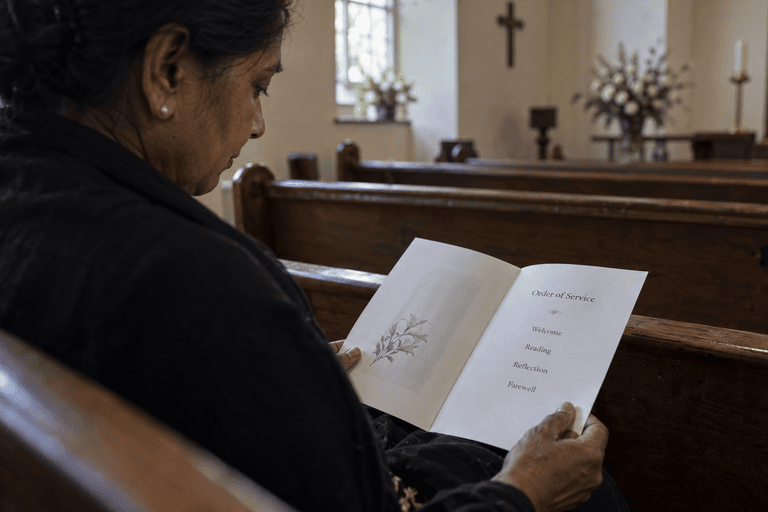
This is where the keepsake becomes personal. You might arrange pressed petals around a small photo of your loved one. Or fill a shadow box with a dried rose, a ribbon from the spray, the sympathy card, and the printed service program. Either one tells the story of the day in a single glance.
Where you hang the piece matters. Mississippi State University Extension advises keeping a framed pressed design out of direct sunlight and other strong light to protect the colors, and says a well-made design can stay beautiful for decades. Use UV-filtering glass where you can, and avoid humid rooms such as bathrooms, since moisture damages dried flowers. Even the best dried flowers gradually fade, as Missouri Extension notes, so think of the piece as something to enjoy rather than something that never changes.
One more idea: siblings can each make a small frame from the same arrangement, so everyone keeps a piece. A single bouquet becomes several quiet reminders in several homes.
Where to Donate Funeral Flowers After the Service
Not every bloom needs to stay with the family. Passing arrangements on can be a lovely way to let the kindness behind them travel a little further. Start by asking the funeral director, because some funeral homes already have donation arrangements and may handle the delivery for you.
Random Acts of Flowers is a nonprofit that turns donated flowers into bouquets hand-delivered to people in healthcare facilities. As of 2026, it accepts arrangements left over from funerals and lists memorial flowers as their own category. Its donation page is written for the flagship location in Knoxville, Tennessee, and points donors elsewhere to its affiliate locations, so check for one near you and confirm it still accepts funeral flowers. It also cannot pick up from residences or gravesites, so plan to drop the flowers off.
Other possible recipients include nursing homes, assisted living communities, hospice houses, places of worship, and community centers. Always call first, because some hospitals restrict fresh flowers in certain units. As of 2026, Memorial Sloan Kettering's ICU visitors' guide, for example, asks visitors not to bring fresh cut, dried, or live flowers into the ICU because they can carry germs that threaten very sick patients.
Before you hand anything over, remove the ribbons and cards, refresh the water, and take out wilted stems. A tidy arrangement is easier for staff to accept and brighter for the person who receives it.
How to Compost or Replant the Arrangements Instead
Strip out everything that is not plant material, then compost the flowers and greenery. Letting them return to the soil is a gentle way to say goodbye, and many families find it comforting.
The step that matters most is the foam. Green floral foam is a plastic. A 2019 RMIT University study on floral foam and microplastics, published in Science of the Total Environment, found that floral foam breaks into microplastics that freshwater and marine animals eat, and that all the animals tested ate it. The study's release does not give disposal instructions, but the sensible reading is clear: put the foam in the trash, never down the drain and never into the compost or garden. Also remove wire, floral picks, plastic easel parts, and ribbon.
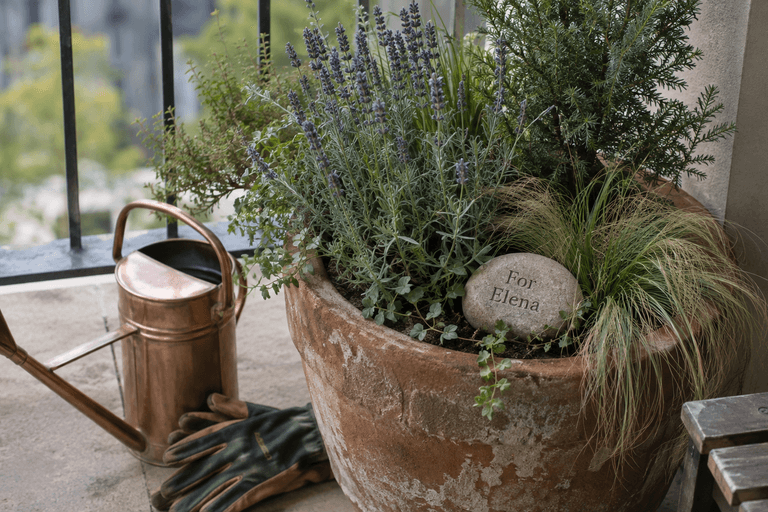
Potted plants can have a second life. Peace lilies, orchids, and small shrubs are common sympathy gifts. Repot them into a larger container, or plant hardy ones outdoors in a sheltered spot where your climate suits them. A replanted gift can become a living reminder at home, and it pairs well with memorial garden ideas for small spaces. If a growing tribute speaks to you, Lovekept also plants a real tree in honor of every published memorial, so the remembrance keeps growing long after the flowers are gone.
How Long Do the Flowers Stay at the Grave?
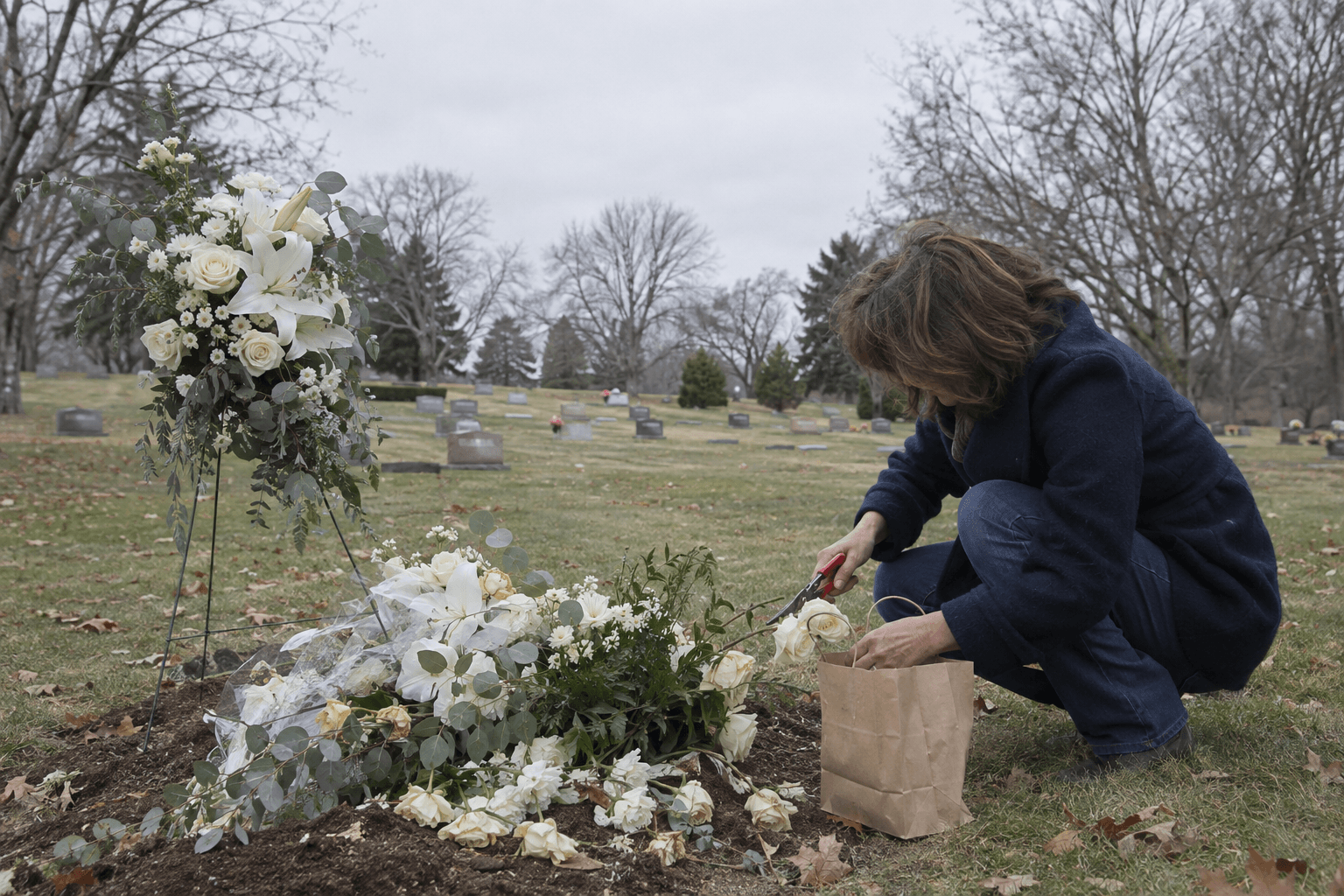
It depends on the cemetery, so the most reliable answer comes from a quick call to the cemetery office. Each cemetery sets its own rules about what can be placed, where it can go, and when staff clear it away.
Federal policy offers a useful example. As of 2026, under NCA Directive 3425, the VA's floral policy for national cemeteries (dated July 16, 2025), VA national cemeteries allow fresh-cut flowers at any time of year in cemetery-supplied containers. Staff remove them as they wilt or for mowing and grounds maintenance, and individual cemeteries publish their own removal schedules. Arrangements may not cover the marker completely, and personal items in good condition are held for at least 30 days so families can retrieve them.
Private and faith-based cemeteries write their own policies, so ask before you leave anything behind that you would hate to lose.
Collect Graveside Keepsakes Early
Graveside arrangements are cleared on the cemetery's schedule, not yours. If you would like a ribbon, a card, or a few blooms to press, gather them within the first few days after the burial, and check your cemetery's current removal policy before you go.
What to Do With the Ribbons and the Cards
Keep them, at least for now. The cards are your record for thank-you notes, and ribbons printed with words like "Beloved Mother" or "Grandpa" are often the pieces families are most glad they saved, even when they did not plan to.
A few simple steps keep everything organized. Tape each card to a list with a short description of the arrangement it came with. Store ribbons flat or rolled in tissue. Later, you can work them into a shadow box, a quilt square, or a memory box.
Photograph every arrangement with its card before it leaves. Then add the photos and the senders' names to a shared online memorial page, so family members in other places can see who reached out. The cards themselves are often worth rereading months later, and if you ever wonder how the senders chose their words, our guide on what to write on a funeral flower card shows how much thought can fit into a few lines.
There Is No Wrong Way to Let Them Go
Whether you press a single rose, fill a shadow box, brighten an afternoon at a care home, or return every stem to the soil, you are still honoring the person those flowers were sent for. Choose what feels manageable right now. The cards and a few photos will hold the memory long after the petals fade.
And if you are a friend rather than family, remember that the quiet weeks after a service are often when support means the most. That is a lovely time to send sympathy flowers to the family's home, so they arrive just as the visitors have gone.
Send Sympathy Flowers to the Family
When the house goes quiet a week or two after the service, fresh flowers let the family know they are still in your thoughts. Send a thoughtful arrangement straight to their home.
Send Sympathy FlowersIs it disrespectful to take funeral flowers home?
No. Taking flowers home is common and often welcomed. Customs differ across cultures and faiths, though, so follow the family's lead and ask if you are unsure.
How long do funeral flowers last?
It varies with the type of flower, the temperature of the room, and how fresh the arrangement was when it arrived. Fresh water and a cool spot out of direct sun help cut flowers last longer. Potted plants can last for years with proper care, which is one reason many families repot them.
Can I still preserve flowers that have started to wilt?
Results are better with fresh blooms, but petals that have only started to wilt can still be pressed. Skip any that are moldy or soggy, since moisture is the enemy of every drying method.
Is it okay to throw funeral flowers away?
Yes. You do not have to keep anything. Composting the flowers and greenery is a gentle way to let them go, as long as you remove the foam, wire, and plastic first.
Can I send flowers after the funeral is over?
Yes. Many families appreciate flowers that arrive later, when the visitors have gone home. You can send sympathy flowers to the family's home a week or two after the service.
Should the family keep the easel stands?
Usually not. Easels often belong to the florist or the funeral home, so ask the funeral director before you carry them out.
Sources
- University of Missouri Extension, Drying Flowers and Foliage for Arrangements (G6540)
- Mississippi State University Extension Service, Creating a Pressed Floral Design (Publication P3513)
- Iowa State University Extension and Outreach, Drying Flowers
- CPWR, The Center for Construction Research and Training (NIOSH-supported, published on CDC Stacks), Hazard Alert: Epoxy Resin Systems
- Random Acts of Flowers, Floral and Vase Donations
- Memorial Sloan Kettering Cancer Center, The Intensive Care Unit (ICU) Visitors' Guide
- RMIT University, Floral foam adds to microplastic pollution problem: study
- U.S. Department of Veterans Affairs, National Cemetery Administration, NCA Directive 3425: Floral Policy in VA National Cemeteries
Lovekept's guides are drafted with AI against briefs written by the Lovekept team. Abdullah Nabeel, the founder, is the blog's editor. Read how we produce and correct content at /editorial-standards.