Tree Pod Burial and Burial Pods Explained
Tree pod burial explained: whether burial pods are legal yet, how tree urns for ashes work, what they cost, and where you can legally plant a memorial tree.
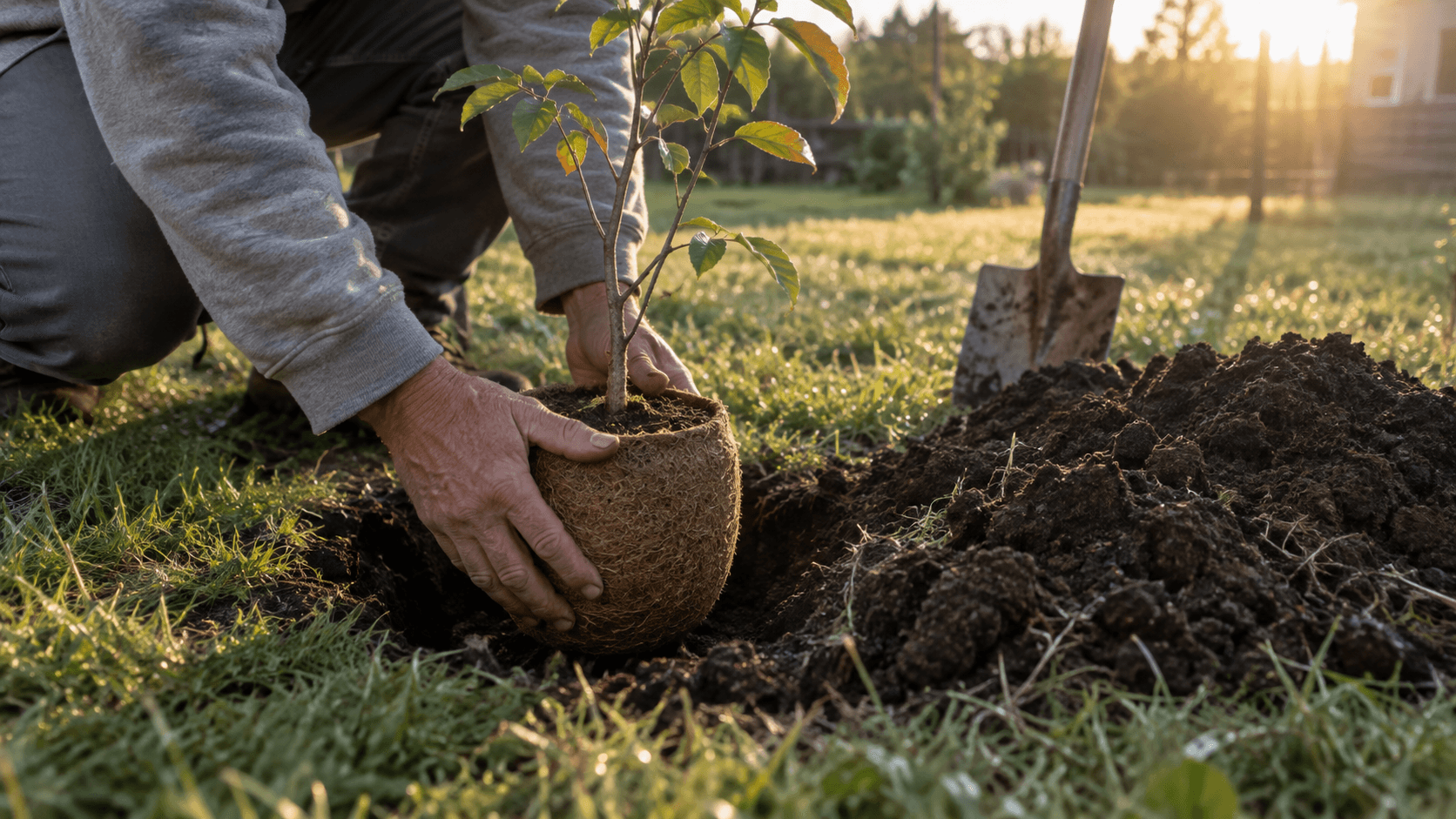
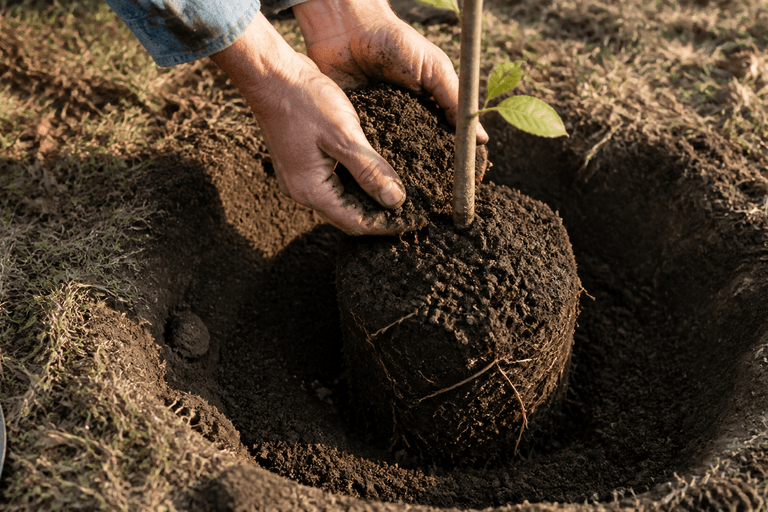
Somewhere in a backyard this week, a family is standing around a freshly dug hole, a small urn resting in the grass beside a young sapling still in its nursery pot. Someone asks the question quietly, almost afraid to say it out loud: can a piece of the person they loved actually become this tree? The idea circulating online, often called tree pod burial, imagines a body curled inside an egg-shaped pod, with a tree planted directly above it, growing from the very spot where someone was laid to rest. It is a striking image, and it has convinced a lot of people that this is already how green burial works.
It isn't, at least not yet, and the real story is more hopeful than the myth. Below, we separate what you can actually arrange today from what is still a design concept, explain how tree urns for cremated remains work and what drives their cost, and look honestly at the soil science behind them. Then we walk through where a memorial tree is allowed to grow, the conservation burial grounds that come closest to the forest-grave idea, how to protect a tree if the land ever changes hands, and how to honor someone with a tree when no burial is involved at all.
Key Takeaways
The full-body burial pod isn't available yet. The best-known design, Capsula Mundi, describes its body pod as still in development and not ready for the market as of 2026. Only its smaller urn for ashes is offered.
Tree urns for ashes are real. You can buy a biodegradable urn designed to be planted with a tree and use it anywhere you have permission to plant.
The tree grows beside the ashes, not from them. Cremated remains are extremely alkaline and high in sodium, so they need to be buffered with soil or kept away from young roots.
Permission decides where you can plant. Your own land works, as does someone else's with written consent. Public land requires an official program or permit from whoever manages it.
Conservation burial grounds come closest to the idea. These natural cemeteries protect the land permanently through a conservation easement or deed restriction, and some allow native trees at burial plots.
A dedicated tree needs no burial at all. Planting a tree in someone's name through a park program or Lovekept sidesteps soil chemistry and land-sale worries entirely.
How Does a Burial Pod Actually Work, and Is Any of It Legal Yet?
Here is the direct answer: as of 2026, the egg-shaped, full-body pod you may have seen online is not something you can buy or arrange through a funeral home. The idea comes from a real design project, but it hasn't made the leap from concept to funeral home menu.
The concept comes from Capsula Mundi, an Italian project that describes a biodegradable, egg-shaped pod holding the body, with a tree chosen by the person during their lifetime planted on top as a living memorial. Capsula Mundi says on its own site, however, that the body pod is still in a development phase and not ready for the market. What the project does describe today is a smaller biodegradable urn, also egg-shaped, that holds ashes.
So the pod itself isn't an option yet, but the idea underneath it is: returning to the earth simply, with nothing standing between the body and the soil. That already exists, legally, under the name green burial. The Green Burial Council describes green burial as caring for someone after they pass with minimal environmental impact, while conserving natural resources and restoring or preserving habitat. In practice, that means no toxic embalming, no concrete or plastic vault, and a biodegradable container such as a simple wood casket or a shroud. Burial rules are set at the state and local level, so what's available depends on where you live and which cemeteries near you offer it.
If you're weighing whether embalming belongs in your family's plans at all, our guide to what happens to the body before the funeral walks through those choices in more detail, including how green burial changes the usual timeline.
Tree Urns for Ashes: How They Work and What They Cost
Unlike the full-body pod, tree urns built for cremated remains are real, and you can buy one today. The basic idea is simple: a biodegradable container holds the ashes, a seed or young tree is planted with it, and the container slowly breaks down in the soil while the tree takes root. Most products take one of a few forms:
- A biodegradable urn paired with a seed or seedling, planted together in a single hole.
- A kit that adds a soil amendment to mix with the ashes, meant to make conditions around the roots less harsh.
- A system that starts the tree in a pot, so it can grow for a while before moving to its permanent spot.
Because these urns are designed to break down, how long one lasts depends on its material, the moisture in the ground, and your local climate. The manufacturer's instructions for your specific urn are the most reliable guide.
So what does a tree urn cost? It depends less on the urn itself than on what comes bundled with it. A kit with seeds typically costs less than one that ships a living sapling, and kits that include a soil amendment or extra equipment cost more still. Shipping a live plant can add to the total, too. Because these product lines and prices change often, check current listings directly with manufacturers rather than relying on a figure you saw a year or two ago, and if you plan to plant at a cemetery or memorial grove, ask whether the site charges its own fee.
Does a Tree Really Grow From a Person's Ashes?
The honest answer is no, not in the way the image suggests. The tree grows from its own seed or sapling and draws nourishment from the surrounding soil. The ashes rest nearby, but they aren't what feeds the roots or drives new growth.
Cremated remains are chemically nothing like compost. According to the Conservation Burial Alliance's guidance on burying cremated remains, they are mostly calcium phosphate and sodium, with an average pH of 11.8, which makes them 200 to 2,000 times too alkaline for what plants can tolerate. That's why ashes can't act as fertilizer, no matter how carefully an urn is designed.
Learning this can feel like a small loss at first. Many families find, though, that letting go of the literal version of the story makes the symbol more honest, not less. The tree doesn't grow out of the person you love. It grows alongside them, in the same patch of earth, marking the same place season after season.
Why Ashes Alone Can Kill a Young Tree, and What the Urns Add
Because cremated remains are so alkaline and salty, the Conservation Burial Alliance warns that they can be detrimental to trees and plants both above and below ground. Poured straight into a planting hole, a concentrated pile of ashes sits exactly where a young tree is trying to establish its first roots. Scattering has its own downside: the same guidance notes that ashes can send phosphorus into nearby waterways, feeding algae blooms that harm fish and plant life.
This is the problem well-designed urns and kits are built to solve. Depending on the product, they keep the ashes physically separated from the seedling's first roots, blend the ashes into a soil amendment meant to buffer the pH and dilute the sodium, or surround the young tree with nutrient-rich soil where its roots need to start. Some conservation burial grounds take a similar approach at a larger scale, burying cremated remains with proven soil amendments and a process designed to protect roots and vegetation, with protocols that vary by location and soil.
A Simple Rule for Planting With Ashes
Never place undiluted ashes directly against a tree's roots. Mix them thoroughly into soil or a soil amendment, use a product designed specifically for planting with cremated remains, or ask the burial ground or planting site how it handles ashes before you dig.
Where You Are Allowed to Plant a Memorial Tree
The short answer: on land you own, on someone else's land with their clear permission, and on public land only through an official program or permit from whoever manages it.
On your own property, planting a memorial tree is generally straightforward, though it's worth checking your homeowners association rules and any recorded easements before you dig, since both can restrict what goes where. If you're planting on land that belongs to a friend or relative, get their permission in writing, even if the conversation itself feels informal. That small step protects the tree, and your memory of it, if the property ever changes hands.
Public land is a different matter. As of 2026, Rocky Mountain National Park requires a permit to scatter ashes, though the permit itself is free. Its conditions ask that ashes be spread out rather than buried or left in a pile, and they don't allow markers, cairns, signs, or plaques of any kind, so a memorial tree isn't an option there. City parks often work differently: rather than letting individuals plant on their own, some offer dedication programs through the parks department, much like sponsoring a bench.
Some cemeteries offer memorial groves or scattering gardens, a good middle ground if you want a dedicated, lasting site without owning land yourself. If you're considering home burial of a body rather than ashes, the Funeral Consumers Alliance notes that, as of 2026, most states allow burial on private property but each municipality has its own zoning requirements, so check with your local government and get any required permits first. And if space is the real constraint rather than permission, our memorial garden ideas for small spaces offer ways to create a living tribute in a modest yard or even a container garden.
Conservation Burial Grounds Where the Grave Becomes Forest
If the question behind all of this is really "can I be buried under a tree," the closest fully legal answer today is a conservation burial ground. These are natural cemeteries created in partnership with a conservation organization, with the land protected permanently by a conservation easement or deed restriction, no matter who manages it later.
According to Kenyon College's overview of green burial, the nation's first conservation burial ground, Ramsey Creek Preserve in South Carolina, opened in 1998. Kenyon's own Kokosing Nature Preserve became the first conservation burial ground affiliated with a college or university land conservancy. There, a natural engraved stone may lie flat at the grave, though one isn't required, and families may plant wildflowers from an approved list of native species. At some plots, approved native trees may be planted too, which is about as close as anyone can legally come today to the tree pod image.
The Green Burial Council certifies burial grounds in three categories, and knowing the difference helps you understand what you're choosing. Hybrid cemeteries are conventional cemeteries that offer green options and don't require a vault. Natural burial grounds are dedicated entirely to sustainable practices, prohibiting toxic chemicals, vaults, non-native stone markers, and non-biodegradable containers. Conservation burial grounds go further, adding a conservation partner, a land management plan, and perpetual legal protection for the land.
One thing to ask early: not every green cemetery accepts cremated remains. The Funeral Consumers Alliance points out that some exclude them, so confirm before you plan around a particular site. For more ways to create a living memorial beyond burial itself, our roundup of meaningful ways to honor a loved one who has passed away is a gentle place to start. Choosing this path means thinking further ahead than most of us are used to, toward a forest that will outlast everyone grieving today.
“A society grows great when old men plant trees whose shade they know they shall never sit in.”
What Happens to the Tree If the Family Moves or the Land Is Sold?
On private land, a tree is part of the property. If you sell your home or the land passes to someone else, the tree goes with it, and the new owner decides what happens to it, including whether it stays. Any ashes buried beside it remain where they were placed. For home burial, the Funeral Consumers Alliance cautions that unless you have established a family cemetery on your property, the land may be sold and the remains disturbed or made inaccessible. Most guides about memorial trees skip this part, and it deserves a straight answer rather than a hopeful one.
It's an uncomfortable question to hold in the middle of grief: where will this tree be in thirty years? Planning for it now costs far less than discovering the answer after a moving truck is already in the driveway. A few practical steps can protect the memory even when the tree itself can't come with you:
- Record GPS coordinates and dated photographs of the tree soon after planting, so the exact spot is never left to memory alone.
- Choose a site more likely to stay undisturbed in the first place, such as a conservation burial ground, a cemetery memorial grove, or a park dedication program.
- Know that a young tree can sometimes be transplanted with its root ball during dormancy, but the ashes buried beneath it cannot travel with it.
- Take cuttings or collect seeds to grow a descendant of the tree at your new home, keeping a living connection even if the original stays behind.
For families who want stronger guarantees, deed restrictions and conservation easements are the heavier, more permanent tools, the same protections conservation burial grounds rely on. They take more time and paperwork, so talk with a real estate attorney before you plant if you want future owners bound to protect a specific tree or gravesite.
Planting a Tree Somewhere Else Instead, With No Burial Involved
Many families decide, after weighing all of this, to separate the tree from the remains completely. The ashes are kept in an urn at home, scattered somewhere meaningful, or buried in a cemetery plot, while a tree is planted in the person's name through a reforestation program, a city park dedication, or a memorial grove.
This approach sidesteps nearly every complication covered above. There's no soil chemistry to manage, no landowner permission to track down, and no fear of losing the tree if you sell a house or move across the country years from now. The tree grows in healthy soil, tended by people whose job it is to keep it alive, whether or not your family is nearby.
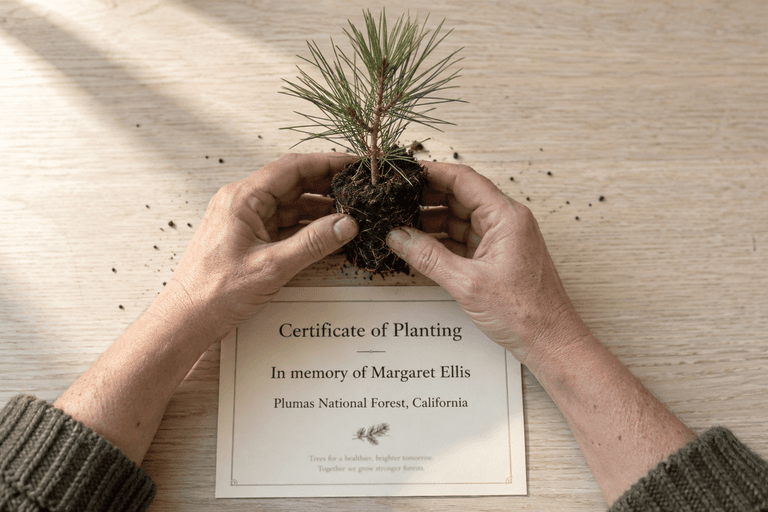
Before choosing a program, look for specifics: where the tree will be planted, which species, whether you receive a certificate, and whether the planting can be verified. Municipal parks programs make a useful benchmark. As of 2026, the City of St. Louis's Tree-Membrance program plants or dedicates trees in most city parks, including Forest Park, for $250 each, with a tag listing the tree type, the donor, and the person honored, plus a certificate and a map of the tree's approximate location mailed after planting.
You can also plant a memorial tree through Lovekept. When you create an online memorial for your loved one, that tree becomes part of a lasting tribute where family and friends can share stories, photos, and condolences. Our complete guide to memorial tree planting covers living memorials in more depth, and our breakdown of how to tell whether a memorial tree program is legit walks through the questions to ask before you donate.
Whichever path feels right, whether it's an urn beneath a sapling, a grave in a protected meadow, or a tree growing in a park far from home, the meaning comes from the same place: choosing to let remembrance keep growing.
Plant a Memorial Tree in Their Name
Plant a real tree through our reforestation partners, with a certificate of planting for your family. No soil, land, or permits to worry about.
Plant a Tree in Their HonorHow much does a tree pod burial cost?
As of 2026, the full-body tree burial pod isn't on the market, since Capsula Mundi describes its body pod as still in development, so there's no real price to quote. What you can price out today is a green burial, which depends on the cemetery and services you choose, and a tree urn for ashes, which depends on whether it includes a seedling, a soil amendment, or other extras. Contact green burial cemeteries and urn makers directly for current figures.
Can you be buried under a tree in your backyard?
As of 2026, most states allow burial on private property, but each municipality has its own zoning requirements, so check with your county and state and get any required permits before making a plan. Burying ashes beneath a tree on your own land is usually a simpler undertaking, though checking local rules is still a good habit. Either way, keep ashes mixed into soil rather than packed against the roots.
Can I scatter ashes or plant a tree in a national park?
Rules vary by park. As of 2026, Rocky Mountain National Park issues free scattering permits, but asks that ashes be spread out rather than buried and doesn't allow markers, cairns, signs, or plaques, so planting a memorial tree there isn't permitted. Check with the specific park before you go.
What tree species work best in a memorial urn?
The best choice is usually a native species suited to your local climate rather than whatever looks appealing in a catalog. The USDA Plant Hardiness Zone Map is the standard tool for checking which trees are likely to thrive where you live, based on the coldest winter temperatures typical for your area.
How long does a biodegradable urn take to break down?
It depends on the urn's material, the moisture in the soil, and the local climate, so timelines vary by product and place. The manufacturer's instructions for your specific urn are the most reliable guide.
Can I split ashes between a tree urn and a keepsake?
Yes. Dividing cremated remains between a tree urn, a keepsake urn, a piece of memorial jewelry, or a scattering ceremony is common, and many families find it lets several traditions coexist rather than forcing a single choice.
Can pet ashes go in a tree urn?
Yes, and the same precautions apply. Cremated remains from pets are also highly alkaline and high in sodium, so mix them with a proper soil amendment and keep them away from a seedling's first roots.
Sources
- Capsula Mundi, Capsula Mundi
- Green Burial Council, What Is Green Burial | Benefits, Practices & Options
- Conservation Burial Alliance, Burying Cremated Remains
- National Park Service, Rocky Mountain National Park, Scattering Ashes
- Funeral Consumers Alliance, Green Burial & Other Environmentally Friendly Choices
- Kenyon College, About Green Burial
- City of St. Louis, Participate in the Tree-Membrance Program
- U.S. Department of Agriculture, Agricultural Research Service, USDA Plant Hardiness Zone Map
Lovekept's guides are drafted with AI against briefs written by the Lovekept team. Abdullah Nabeel, the founder, is the blog's editor. Read how we produce and correct content at /editorial-standards.