Memorial Tree Planting: A Complete Guide to Living Memorials
Plant a tree in memory of a loved one and create a living memorial that grows for generations. A complete guide to memorial tree planting and ceremonies.

What do you do with love that has nowhere left to go? For many families, the answer is to plant something that keeps growing. A memorial tree roots a loved one's memory in the earth itself, standing taller and fuller with every passing year, rather than fading the way a bouquet does within a week.
This guide walks through everything worth knowing about planting a tree in memory of a loved one: why so many families choose it over cut flowers, how to pick the right species and spot, how to host a small ceremony around the planting, and how pairing your tree with an online tribute keeps the memory close no matter where you live. If you're weighing your options more broadly, our guide to meaningful ways to honor a loved one who has passed away covers other living tributes worth considering too.
Key Takeaways
A living memorial keeps growing unlike cut flowers or a plaque, a memorial tree changes and matures year after year.
Trees over flowers many families now plant a tree in memory of a loved one because it lasts far longer than a bouquet that fades within a week.
Choosing and planting matters picking a species suited to your climate and site matters more than picking your personal favorite tree.
A ceremony brings people together a simple planting ceremony with readings, shared memories, and soil turned by hand creates a meaningful send-off.
Pairing tree and tribute an online memorial with photos, stories, and location details keeps your tree visitable and meaningful from anywhere.
What Is a Living Memorial?
A living memorial is simply a tribute that continues to change and grow, unlike a plaque or a headstone that stays fixed in place. A tree planted in someone's honor becomes taller, fuller, and more established each year, mirroring the way a life's influence keeps expanding long after it ends.
Bereavement researchers generally observe that tending something living, whether it's a garden, a tree, or even a small plant on a windowsill, can support healing by giving grief a gentle, ongoing task rather than a single finished act. A living memorial invites you to return, season after season, to a place where remembrance keeps growing.
Why Plant a Tree Instead of Flowers for a Funeral
When families come to us after a loss, one question comes up again and again: is there something more lasting we can do than send flowers? Cut flowers are beautiful, but they're gone within a week, a fitting symbol of the moment but not of the memory. A tree in memory of a loved one, by contrast, is still standing five years later, ten years later, long after the funeral itself has become a quiet memory.
Grief counselors generally note that grief doesn't end when the service does; it continues to unfold for months and years. A memorial tree honors that timeline. It gives grief somewhere to go that isn't limited to a single day of mourning, offering a place to return to each spring when new leaves appear, or each fall when the branches change color.
Across cultures and spiritual traditions, planting reflects continuity. Many communities plant trees at births, weddings, or after a loss, symbolizing an unbroken thread between generations. Whether your family holds a specific faith tradition or simply values nature and legacy, a memorial tree carries meaning that translates across nearly every belief system, which is part of why it has become such a popular alternative to funeral flowers.
Choosing a tree instead of, or alongside, flowers doesn't mean giving up the beauty of a floral tribute at the service itself. Many families do both: fresh flowers for the funeral, and a tree planted in the weeks after, once there's time to choose the right species and spot.
“A society grows great when old men plant trees in whose shade they know they shall never sit.”
Choosing the Best Trees to Plant in Memory of a Loved One
Choosing a tree can feel surprisingly personal. Was your loved one someone who found peace under a big shade tree, or someone who loved delicate spring blossoms? Symbolism matters, and many families choose a species for what it represents: an oak for strength and endurance, a maple for warmth and change through the seasons, a dogwood for gentleness and renewal, or an evergreen for a memory that never fades.
Most guides will tell you simply to pick a tree you love, and that's a fine place to start. But the more enduring choice, and the one arborists and conservation groups generally recommend, is a species native to the spot where you plan to plant it. A native tree is already adapted to the local rainfall, soil, and temperature swings, which means it needs less intervention to survive its first difficult years and is far more likely to still be standing decades from now. A beautiful but poorly suited tree can struggle for years before it ever reaches the size that makes it feel like a true living memorial.
Longevity and mature size are worth thinking through as well. Oaks and maples can eventually grow quite large, so they need room to spread both above and below ground, away from foundations, septic lines, or power lines. Dogwoods and other understory trees stay smaller and work well in tighter yards or near a patio where you'll want to sit close by. If you're unsure what will actually thrive where you live, a local extension office or nursery can point you toward native options, or you can browse how our tree planting works to see the species typically used through our reforestation partners.
Where to Plant a Memorial Tree: Home Yard, Reforestation, or National Forest
Once you've chosen a species, the next question is where the tree will actually live. Some families plant in their own yard so they can watch it grow outside the kitchen window. Others prefer a reforestation or nonprofit program, restoring forest land while honoring their loved one, which is how you can plant through our reforestation partners. Still others choose public land, like a national forest, for its open, natural feel. Here's how the three options compare.
| Location | Best for | Maintenance | Can you visit | Longevity |
|---|---|---|---|---|
| Home yard | Families who want to visit often and watch the tree grow year over year | You handle watering, pruning, and care yourself | Anytime, right in your own yard | Tied to how long the property stays in the family |
| Reforestation or nonprofit program | Families who want their tribute to also restore forest land or support conservation | Handled by the planting organization or nonprofit partner | Depends on the program; some sites welcome visitors, others are remote | Often protected long term as part of a managed forest |
| Public land, such as a national forest | Families drawn to open, natural landscapes and shared public spaces | Managed by public land or forestry agencies | Generally yes, though pinpointing the exact tree can be difficult | Tied to the ongoing health and management of the forest |
How to Plant a Memorial Tree, Step by Step
Choose the spot and season
Pick a location with enough room for the tree's mature size, and plant in early spring or fall when temperatures are mild and rainfall is more consistent.
Dig a proper hole
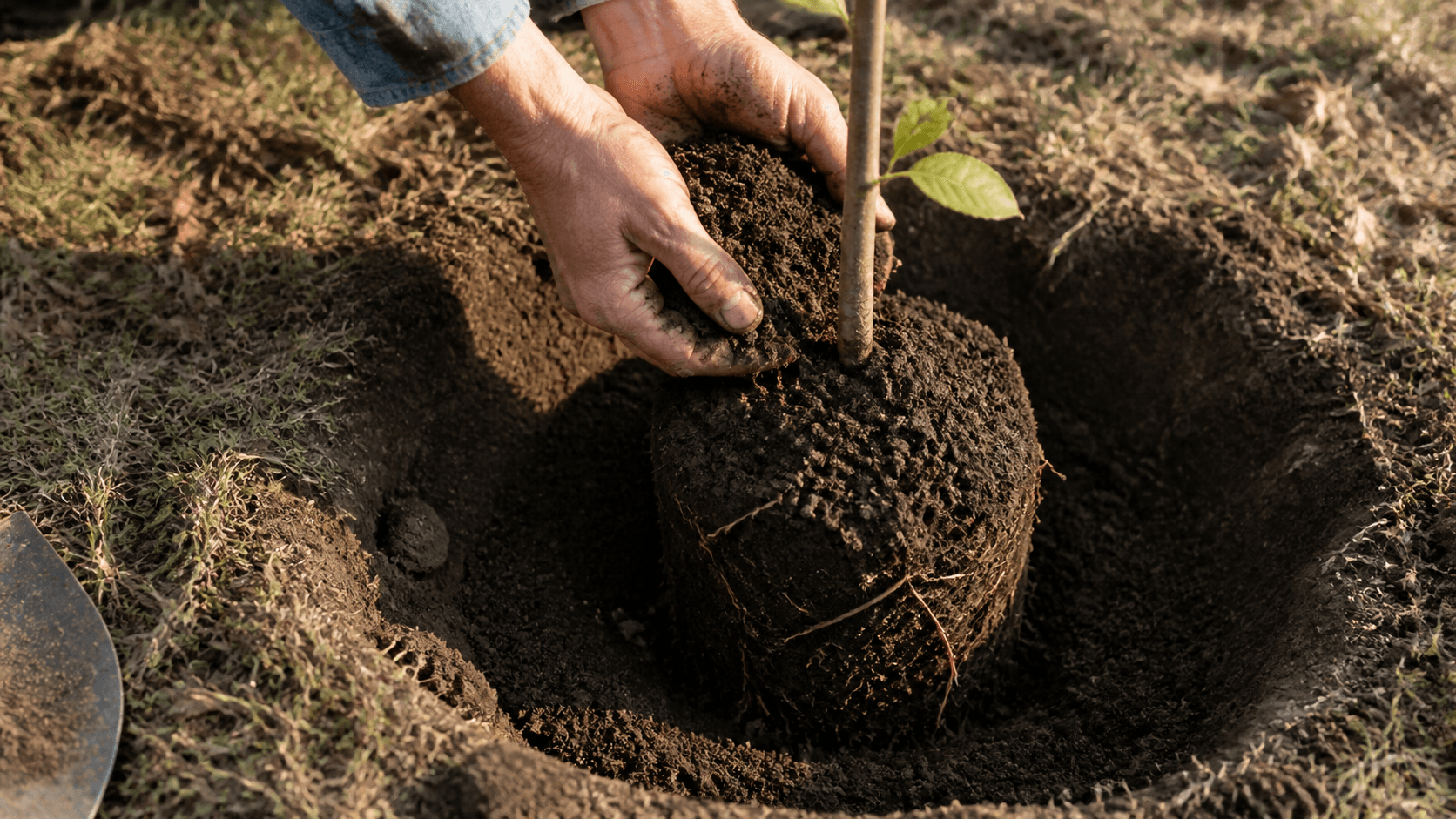
Dig a hole about twice the width of the root ball, but no deeper than the root ball itself, so the tree doesn't settle too low over time.
Set the tree at the right depth
Position the tree so the top of the root ball sits level with, or just slightly above, the surrounding soil, then gently straighten it before backfilling.
Backfill and water deeply
Fill the hole with the original soil, tamping gently to remove air pockets, then water thoroughly to help the roots settle in.
Add a layer of mulch
Spread two to three inches of mulch around the base, keeping it away from the trunk itself, to retain moisture and regulate soil temperature.
Water regularly through the first year
Check the soil weekly and water deeply whenever it feels dry a few inches down, since the first year is when a young tree needs the most consistent care.
How to Host a Memorial Tree Planting Ceremony
A tree can be planted quietly, just one or two people and a shovel, and that is enough. But many families find it meaningful to turn the planting itself into a small ceremony, a chance to gather the people who loved this person and mark the moment together.
Start simple. Choose a date that feels right, perhaps a birthday, an anniversary, or simply the first weekend the weather cooperates. Invite the people who mattered most to your loved one, even if it's a small group. Consider a short reading, a favorite song, or a few quiet minutes of silence before anyone speaks.
In traditions from around the world, planting and tending reflect ongoing care, not a single act completed and forgotten. Some families take turns placing soil around the roots. Others invite each guest to share one memory before the tree goes into the ground. There's no single right way to do this, and the ceremony can be as formal or as simple as feels true to your family and your beliefs.
Whatever shape it takes, a planting ceremony gives grief a place to stand, and gives everyone present something hopeful to look forward to: watching this tree grow alongside their own memories of the person it honors.
Memorial Tree Ceremony Checklist
Pick a date and location choose a meaningful day and a spot with enough room for the tree to mature.
Invite your guests even a small gathering of close family and friends can make the moment feel complete.
Choose the tree and tools have your sapling, a shovel, gloves, mulch, and water ready before everyone arrives.
Prepare readings or a song select a poem, passage, or piece of music that reflects your loved one.
Plan a shared ritual decide how guests will take part, whether that's adding soil or speaking a memory aloud.
Arrange a keepsake a planting certificate or a few photos help everyone remember the day.
A Simple Ritual That Brings Everyone Together
Invite each guest to add a handful of soil around the roots, tuck a written note into the ground, or share a brief memory before the tree is planted. This small ritual appears in some form across many traditions, and it helps everyone present feel like they played a part in the tribute, not just witnesses to it.
Pairing a Memorial Tree With an Online Tribute
A tree grows in one place. The people who love the person it honors rarely stay in one place. A sibling across the country, a grandchild who has never seen the yard where it was planted, a friend who moved away years ago: all of them deserve a way to be part of the tribute too.
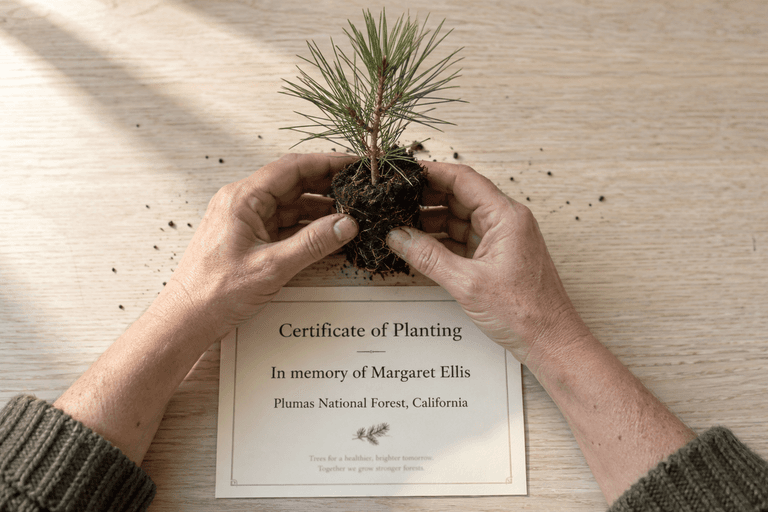
One thing we hear often in our experience helping families is a specific regret: after planting a tree through a general reforestation program, they realize they have no way to actually find it again. The forest is real, and the impact is real, but the tree itself becomes anonymous among thousands of others. A memorial tree paired with an online tribute solves this. With GPS coordinates, a planting certificate, and a QR code linking back to the memorial page, the tree stays connected to the person it honors instead of disappearing into a landscape. That certificate, whether it notes the planting location, the species, or the program behind it, becomes a tangible keepsake your family can hold onto and even frame at home.
This is why Lovekept plants a real tree with every memorial we help a family create. The tree grows in the world, while the online memorial holds what a tree alone cannot: photos, written stories, a shared guestbook, and a life timeline that friends and family can add to from anywhere. If writing about your loved one feels like the hardest part, our obituary writer can ease that burden with AI-assisted drafting that still sounds like you.
Together, the two halves of the tribute complete each other. When you're ready, you can create a lasting online tribute in a guided, step-by-step process, and see what is included at every plan level before you begin.
Eco Friendly Alternatives to Funeral Flowers
A memorial tree isn't the only living tribute worth considering, and it doesn't have to be the only one you choose. If you're weighing eco friendly alternatives to funeral flowers, a few options tend to resonate with families looking for something that lasts.
- A memorial garden: a dedicated bed of perennials that returns year after year, ideal for a family who wants ongoing tending as part of the healing process.
- A wildflower planting: a patch sown for pollinators, bringing color and movement back to a space while supporting local bees and butterflies.
- A dedicated bench: a quiet, lasting place to sit near a tree, a garden, or a favorite view, giving visitors somewhere to pause and remember.
None of this means giving up flowers altogether. If fresh blooms still feel right for your family, especially for the funeral itself, thoughtful flower options remain a beautiful, traditional way to express care in the moment. Many families simply choose to pair both: flowers for the service, and something living, like a tree or a garden, for the months and years that follow. For a fuller look at how these choices fit together, our guide to meaningful ways to honor a loved one who has passed away walks through even more options.
Create a Living Tribute That Grows
Bring together a beautiful online memorial and a real tree planted in your loved one's honor, a tribute that lives on in both the digital world and the natural one.
Create a Memorial
Abdullah Nabeel
Abdullah Nabeel is the founder of Lovekept, which he built after his own experience with loss to give families a lasting place for the people they love.