Are Memorial Trees Legit? How Tree Planting in Memory Works
Are memorial tree planting services legit? Learn how they work, how to verify a tree was planted, red flags to avoid, and what to check before you send one.
Are Memorial Tree Planting Services Legit? The Short Answer
Are memorial tree planting services legit? The established ones are: you pay, and a real tree gets planted. What most people picture, though, isn't quite how it works. Reputable programs usually plant your tree as one seedling among thousands in a group reforestation project, not as a single sapling marked with your loved one's name in a spot you could visit next spring.
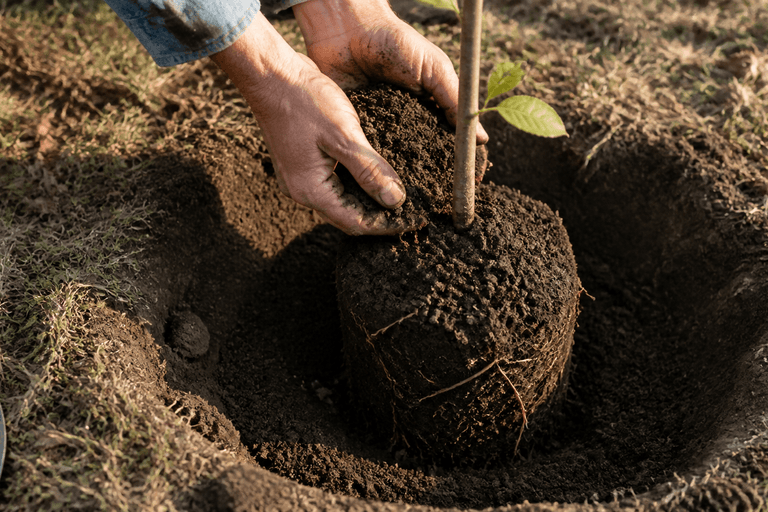
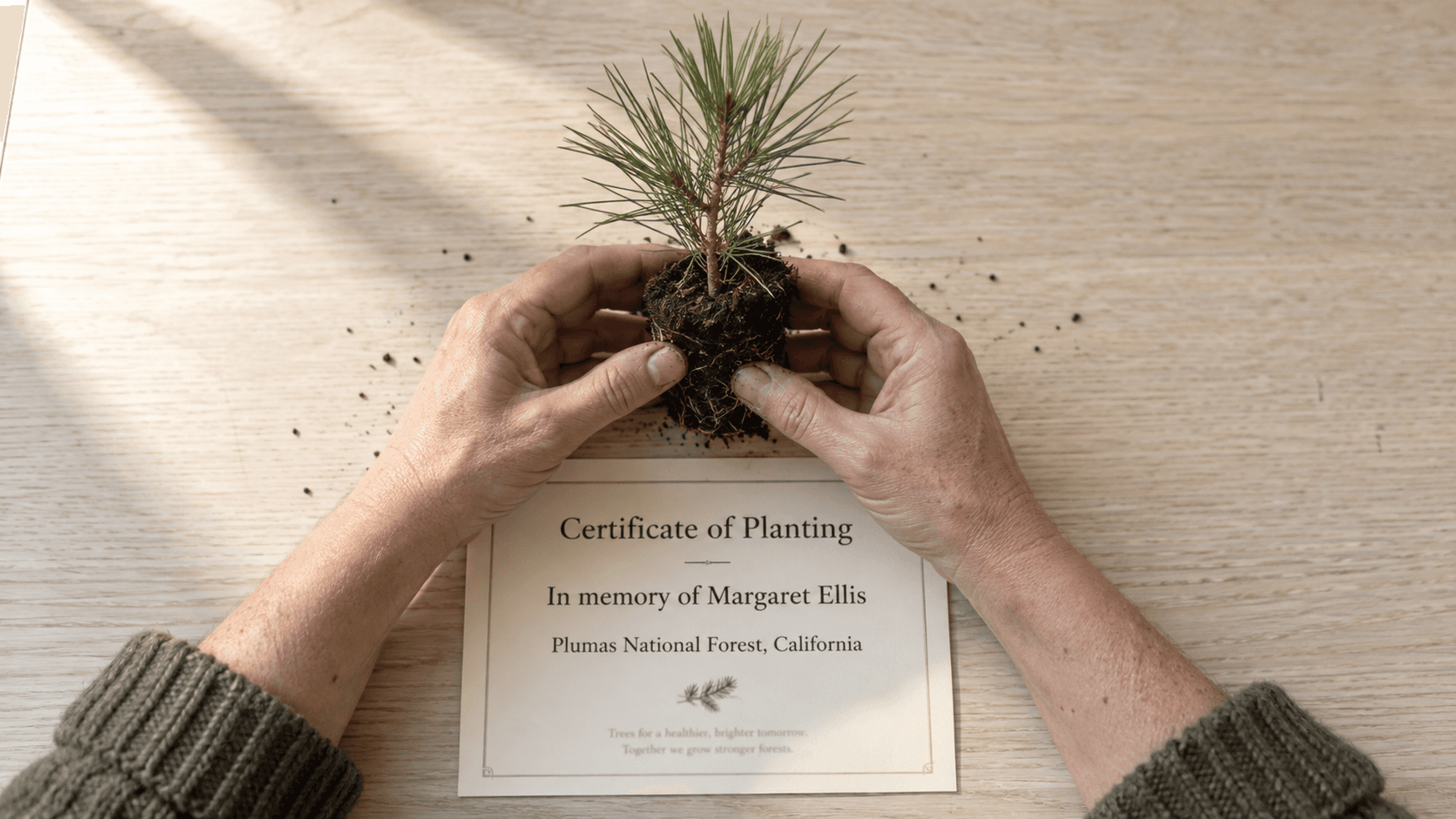
In practice, a memorial tree is usually a native seedling, funded by your gift and planted by a professional crew in a forest that needs it, often land recovering from wildfire, insects, or disease. The organization sends a card or certificate bearing the name of the person you're honoring. The tree itself carries no label.
So if you're weighing a memorial tree as a sympathy gift, the real work isn't choosing the prettiest certificate. It's confirming that the organization behind it does what it says. That means checking its status, understanding when and where the tree actually goes into the ground, and knowing exactly what the grieving family will find in their mailbox. This guide walks through each of those steps, plus the warning signs of a company that isn't legitimate at all.
Key Takeaways
Reputable services really do plant trees usually as native seedlings in large reforestation projects, not as a single tree set aside just for you.
Planting happens in seasonal batches so several months can pass between your order and the day your tree goes into the ground.
You can check an organization yourself the IRS Tax Exempt Organization Search, published annual reports, and charity watchdogs each take only minutes to use.
Pressure and unusual payment requests are red flags legitimate groups don't rush you or insist on gift cards, wire transfers, or cryptocurrency.
Most reforestation trees can't be visited they're planted in bulk across a project area, so choose a park, cemetery, or backyard tree if a place to return to matters most.
Tax deductibility depends on who you give to a gift to a qualified charitable organization may be deductible for you, a retail purchase generally isn't, and the family receiving the tree can't deduct it either way.
How Memorial Tree Planting Services Actually Work
Once you know legitimate programs really do fund planting, it helps to see what happens between checkout and the moment a seedling goes into the ground. Many organizations that sell memorial trees don't plant them with their own crews. Instead, they channel funds to planting partners such as the National Forest Foundation, which works with forestry experts from the U.S. Forest Service to plant the right trees in the right places, or to projects supplied by the U.S. Forest Service's own nursery network, which grows millions of seedlings every year for reforestation. Here is how a single order typically moves through that system.
From Your Order to the Forest, Step by Step
Choose a program and pay per tree
You pick a nonprofit or company and pay for one tree or a bundle, usually adding the name of the person you're honoring for the card or certificate.
Your gift reaches a planting partner
The organization pools orders and directs funding to planting partners, such as forestry agencies or groups like the National Forest Foundation that work with the USDA Forest Service.
Nurseries grow the seedlings
Native seedlings are raised in nurseries until they're sturdy enough to survive being planted in the field.
Crews plant during the next suitable season
Planting happens in seasonal batches, often in spring or fall, in areas recovering from wildfire, insects, or disease, sometimes months after you ordered.
The organization tracks what was planted
Well-run programs keep records of their projects, so they can report real planting totals instead of vague promises.
You receive a card or certificate
The family or sender receives a printed or digital card naming the person being honored, often with details about the region or forest where the tree is planted.
Do They Really Plant a Tree for Every Order?
Reputable programs do, in the sense that every tree sold funds a tree planted. But 'funded' and 'planted today' are two different things, and the gap between them is where most of the confusion about legitimacy comes from.
Trees go into the ground in batches, not the moment your payment clears. The Arbor Day Foundation, for example, plants at the most suitable time for each forest, usually in the spring or fall, which can be months after you place your order. Not every seedling survives its first years in the field, either, which is why the totals an organization publishes tell you more than the promises on its homepage.
When families ask us whether their tree is real, our honest answer is yes, in the way a planting of native seedlings is real. It goes into a plan for a specific forest and season, not into a gift bag with your loved one's name stitched on it.
So the promise to look for isn't a GPS pin. It's a named planting partner, a specific region, and a stated planting season. A company that can tell you 'your tree will be planted with the National Forest Foundation in a specific national forest this spring' is being straight with you. One that dodges the question, or promises a personal, visitable tree for the price of a bulk seedling, probably isn't.
There's a legal side to this, too. The FTC's Green Guides say marketers need a reasonable basis for their environmental claims, and 'we planted your tree' is exactly that kind of claim. That's why the details you can check, the partner, the region, and the season, matter more than any checkout-page copy.
How to Verify the Tree Was Actually Planted
You don't have to take a memorial tree company's word for it. A few checks, most of which take only minutes, will tell you whether an organization is legitimate before you send it a dollar.
- Use the IRS Tax Exempt Organization Search to confirm the group is a qualified organization, the status IRS Publication 526 says a charity must have for your gift to be tax deductible.
- Read what it publishes about its finances and results, such as an annual report, to see how much of each gift reaches its programs and how many trees it has actually planted.
- Check its reputation with a charity watchdog. The FTC points donors to groups such as the BBB Wise Giving Alliance that evaluate charities, and searching the organization's name along with words like 'complaint' or 'scam' can surface problems fast.
- Ask which planting partner and region your gift supports, by name.
- Ask for the planting season, and for a project update once the trees are in the ground.
An organization that answers all five clearly has earned your trust. If it can't, or won't, that silence is often the first warning sign.
Red Flags in a Memorial Tree Company
A memorial gift is often bought in a hurry and with a heavy heart, so it pays to slow down. The FTC's guidance on charity fraud is blunt: legitimate organizations won't pressure you to give on the spot, and they won't ask for payment only by gift card, wire transfer, or cryptocurrency. Here's how those warning signs, and a few specific to tree planting, tend to show up.
Warning Signs to Watch For
No named planting partner or location, just vague talk about saving the planet. No nonprofit status, yet claims that your purchase is tax deductible. Pressure to buy right now, before you have time to look the company up. Payment requested only by gift card, wire transfer, or cryptocurrency, methods the FTC flags as charity scam signs. A running tree counter on the homepage with no annual report or planting totals behind it. A promise of a single, named tree you can visit in person, priced like a bulk reforestation seedling. No physical address, phone number, or real person you can reach.
Nonprofit Reforestation Programs vs Commercial Tree Sellers
Memorial tree options don't all work the same way. Knowing the differences helps you choose the one that fits how the family will actually experience the gift.
Nonprofit reforestation programs
Your tree goes into public or partner forest land as part of a large planting project, and you typically can't visit it (more on that below). The recipient gets a card or certificate, planting happens in the next suitable season, and pricing is usually set per seedling. Because many of these programs are run by qualified charitable organizations, your gift may be tax deductible under the rules in IRS Publication 526, though the family receiving the tribute can't deduct a gift made in their honor.
Commercial memorial tree sellers
These are for-profit businesses, and some fund planting through the same kinds of reforestation partners. Visiting the tree is usually just as unlikely, the recipient still gets a card or certificate, and timing still follows the planting season. The difference shows up in the price, which often bundles design, packaging, and marketing costs on top of the seedling itself. Because it's a retail purchase rather than a charitable gift, it generally isn't tax deductible.
A live sapling shipped to the family
Here the tree goes straight to the family's address, so they can see it every day, because it grows in their own yard. What they receive is a living plant to care for, not just a card. Timing depends on shipping and the local growing season, and the price covers the plant plus packaging and shipping. As a retail purchase, it isn't tax deductible either.
A dedicated tree in a park, cemetery, or campus program
The tree goes into a specific, managed plot, so there's a real place to return to, sometimes marked with a small plaque. What the family gets is a place, not a mailed card. Timing follows the institution's own planting calendar and site availability, often the longest wait of the four. It's usually the most expensive option, too, since it can cover a larger tree, professional installation, a plaque, and ongoing care. Whether it's deductible depends on whether the program is run by a qualified organization, so check its status the same way you would for any charitable gift.
How Much Memorial Tree Planting Costs and What the Price Covers
There's no single price, because cost depends on which of the four options above you choose, and prices change over time. Reforestation programs typically charge a modest amount per seedling, but check each organization's current price when you order rather than relying on a figure you saw elsewhere.
A single reforestation seedling typically helps cover:
- The seedling itself and the nursery work that grows it
- Site preparation and professional planting labor
- Project records and follow-up, at well-run programs
- A share of the organization's overhead and administration
- The printed or digital card or certificate naming your loved one
Add-ons change the math. Premium printed cards and multi-tree bundles cost more than a single seedling. A live sapling shipped to a family's door adds the plant itself, plus packaging and shipping. A dedicated park, cemetery, or campus tree tends to cost considerably more, since you're paying for a larger tree, installation, and sometimes a plaque and ongoing care.
If you'd like the tree to sit alongside a place where people can gather and share memories, every published Lovekept memorial includes a real tree planted through our reforestation partners, along with a certificate of planting. You can review current plan details on our pricing page, or create a memorial that includes a planted tree in just a few minutes.
Can You Visit or Find the Tree They Planted?
With most reforestation programs, no. Seedlings go into the ground by the thousands across a project area, and they aren't tagged or tracked one by one the way a single tree in your yard would be.
The Arbor Day Foundation is direct about this. Even when you request a specific forest, your tree is planted along with thousands of other trees across that area. The Foundation also advises against visiting its planting areas, which are often remote and hard to reach, though each tree is still recorded in its online tree registry.
Dedicated trees planted through a park, cemetery, or campus program work differently. Because the institution controls a specific plot of land, there's usually a set location you can return to, sometimes with a small plaque bearing the person's name.
If having a tree you can stand beside matters most, consider planting one yourselves, in a backyard, a community garden, or on family land with permission. Our complete guide to memorial tree planting and living memorials walks through choosing a species, a site, and a planting method. Before any shovel goes in, contact 811 a few days before you dig. The Common Ground Alliance's free before-you-dig service arranges for buried utility lines to be marked, so a meaningful afternoon stays a safe one.
“Someone's sitting in the shade today because someone planted a tree a long time ago.”
What to Look for Before You Gift a Memorial Tree to a Family
Before you send a memorial tree to a grieving family, a few quick checks help the gift land the way you intend.
- Read the obituary or service notice for 'in lieu of flowers' wishes, and follow them if the family named a particular cause or organization.
- Run the verification checks above before you pay, so the gift is as real as the sentiment behind it.
- Think about the family's beliefs, space, and energy, especially before choosing a live sapling over a reforestation gift.
- Double-check the spelling of the name being honored, and confirm when and how the card will be delivered.
- Make sure your own name appears on the card, so the family knows who to thank.
- Choose a program that tells you, and therefore the family, roughly where the tree will be planted.
From working with families through the memorial planning process, one thing that surprises people is how differently two households react to the exact same gift. For one family, a live sapling feels like one more responsibility to keep alive during a season that already feels heavy. For another, tending that same tree becomes the kind of quiet, hands-on ritual that helps them grieve. Neither reaction is wrong, which is why it's worth thinking about the specific people you're sending it to, not just the gift itself.
If a live tree doesn't feel right for this family, that's completely fine. You can still plant a memorial tree in their name through a reforestation program without asking them to care for anything, or send sympathy flowers as a simpler gesture. Whatever you choose, what matters most is the message behind it: their person is remembered, and their story is still growing.
Plant a Memorial Tree in Their Name
Honor their name with a tree planted through trusted reforestation partners, and receive a certificate of planting you can share with family.
Plant a Tree in Their HonorSources
- National Forest Foundation, Reforestation Program — National Forest Foundation
- USDA Forest Service, Reforestation: Nature and nurseries
- Arbor Day Foundation, Frequently Asked Questions | Arbor Day Foundation
- Federal Trade Commission, Part 260: Guides for the Use of Environmental Marketing Claims
- Internal Revenue Service, Publication 526 (2025), Charitable Contributions
- Federal Trade Commission, Before Giving to a Charity | Consumer Advice
- Federal Trade Commission, Charity Fraud | Consumer Advice
- Common Ground Alliance, 811 Before You Dig
Lovekept's guides are drafted with AI against briefs written by the Lovekept team. Abdullah Nabeel, the founder, is the blog's editor. Read how we produce and correct content at /editorial-standards.