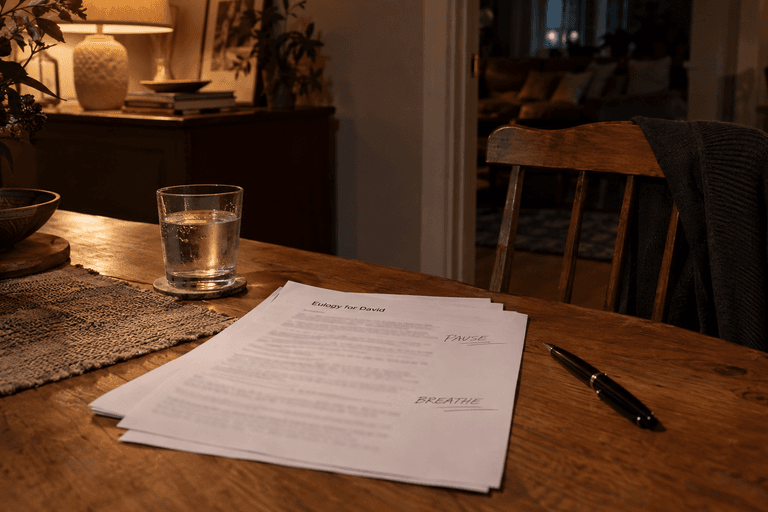
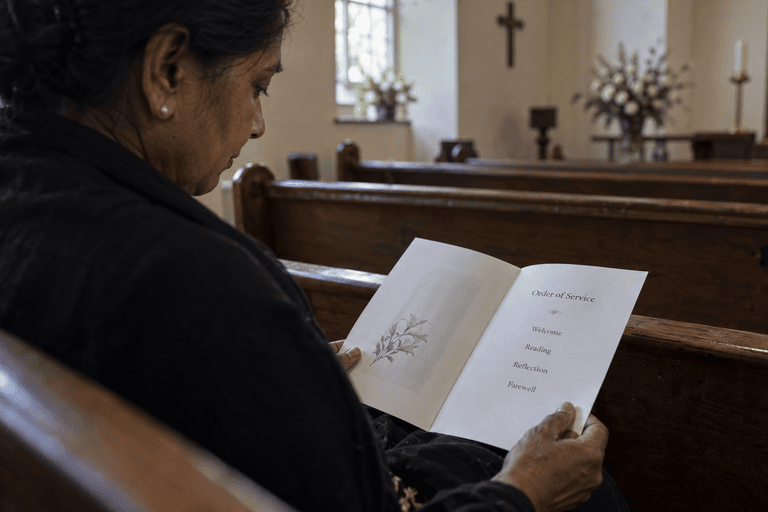
Eulogy vs Obituary: What Is the Difference?
Eulogy vs obituary: who writes each, how tone and length differ, which to write first when time is short, and how to reuse your favorite stories in both.
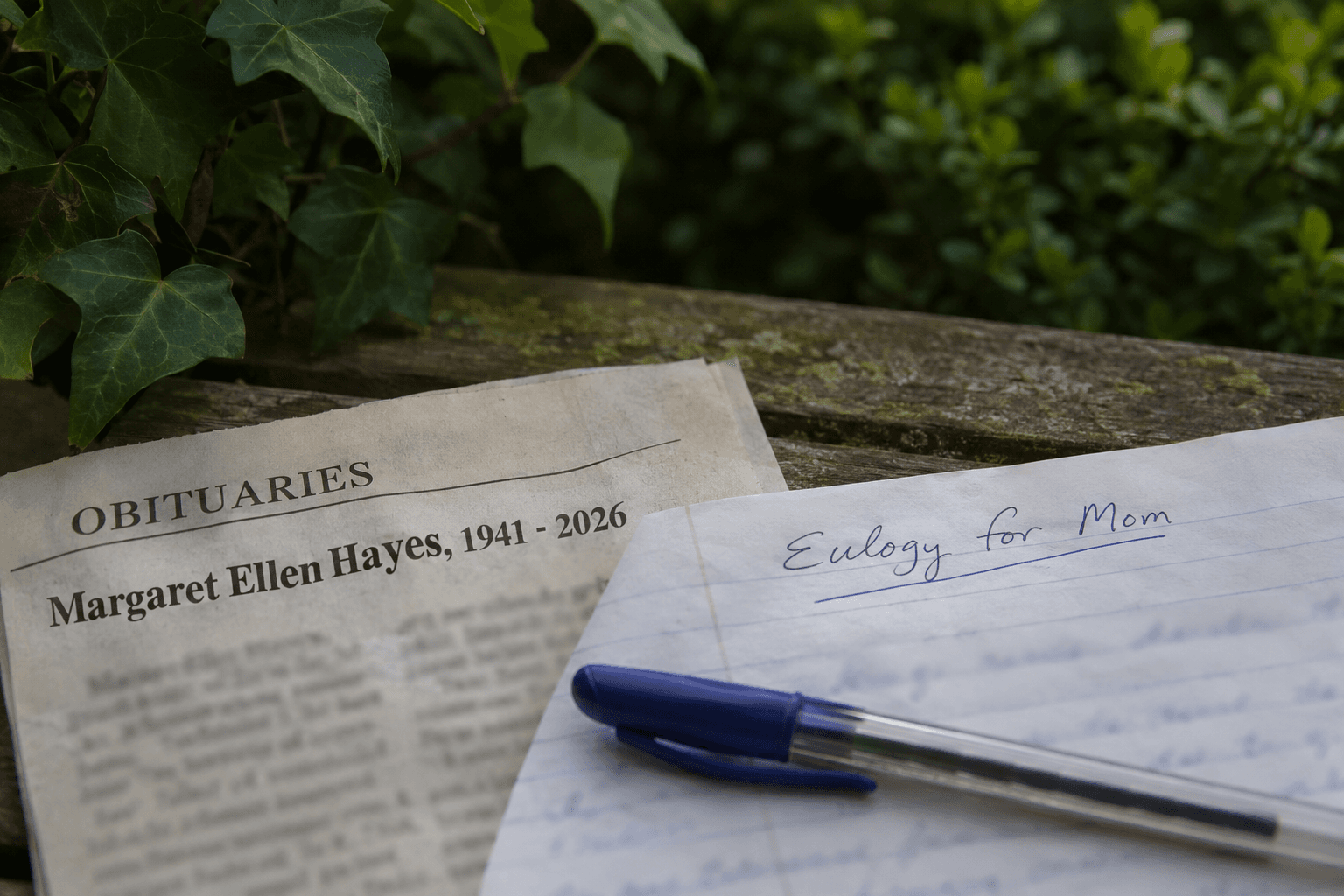
Eulogy vs Obituary: Two Tributes With Two Different Jobs
When someone you love passes, two writing tasks often arrive at once. The funeral home asks for an obituary, and a relative asks whether you will say a few words at the service. They sound alike, but they are different jobs.
An obituary is a written notice, published in a newspaper or online, that tells people someone has passed and gives the facts: dates, family, and service details. A eulogy is a personal speech given aloud at a funeral or memorial service, built around stories and character.
The words themselves point to the difference. According to the Online Etymology Dictionary, eulogy comes from the Greek eulogia, meaning praise, literally "a speaking well of" someone. Obituary traces back to the Latin obitus, a departure, and came to mean a record or announcement of a death. One form speaks well of a person. The other records that they have gone.
If you have been asked to write one or both this week, that is a lot to carry while grieving. This guide will help you tell the two apart, decide what goes where, and plan your time. For the complete speechwriting process, start with our guide on how to write and deliver a eulogy.
Key Takeaways
Written versus spoken: An obituary is written and published. A eulogy is spoken aloud at the service.
Facts versus stories: Obituaries carry the full name, dates, survivors, and service times. Eulogies carry stories and character.
Length: A printed obituary usually runs a few hundred words. A stand-alone eulogy is often four to six minutes, and rarely more than 10.
Reuse: The same stories can appear in both, but change their form. One text rarely works well as both.
Order: When time is short, write the obituary or death notice first. It has a deadline and tells people where to gather.
Death notices: A death notice is the shortest of the three, holding only the essentials and service details.
Who Writes the Eulogy and Who Writes the Obituary?
The obituary is usually written by the immediate family or whoever is handling the arrangements, often with help from the funeral home. The eulogy is usually written and delivered by someone close to the person being remembered, such as a child, spouse, friend, or clergy member. Sometimes several people share it, each speaking for a few minutes.
Funeral homes often play a practical role with the printed piece. The Federal Trade Commission's funeral pricing checklist lists obituary notices among the items a funeral home may buy on a family's behalf, so it is worth asking your funeral director whether they will place the notice for you and what it will cost.
The labels carry some history, too. The Boston Public Library's genealogy guide notes that obituaries are usually written by newspaper staff and tend to be longer, while death notices are placed by a family member. Many papers also sell space for longer, family-written obituaries, as the section on length below shows, so in practice the life story often lands on your family's desk.
When that happens, one person can quietly end up carrying every writing task. Try to split them. Let one relative gather facts and draft the obituary, and let someone else, ideally the person who will speak, focus only on the eulogy. If the family sees details differently, our guide to writing an obituary the whole family will agree on can keep the process calm.
How the Tone Differs Between Spoken and Printed Words
An obituary is read silently by people scanning for information, so it uses formal third person, complete names, and compact sentences. A eulogy is heard once, at the speed you speak it. It works best in first person, with short sentences, a little repetition, pauses, and one or two concrete scenes the audience can picture.
Here is the same fact written both ways.
- Obituary: "Margaret Ellis was a lifelong gardener and member of the Riverside Garden Club."
- Eulogy: "Every spring, my mother knelt in the dirt before breakfast. She talked to her tomatoes. She said they listened better than we did."
A common mistake is writing the eulogy like a résumé. A list of jobs and achievements reads well on paper and slips right past a listening room. Where the eulogy falls in the ceremony shapes its tone as well, and our overview of the funeral order of service shows how it fits among readings, music, and other tributes.
What Facts Belong in an Obituary but Not in a Eulogy
Logistics belong in print. Service times and donation details are for people who are not in the room yet, and the audience at the service is already there. Some newspapers make this split explicit. As of 2026, the Anchorage Daily News says its free notices are limited to name, date and place of death, and service details, and anything beyond that is a paid obituary. Here is how the common elements sort out. For the complete list, see our checklist on what to include in an obituary.
- Full legal name and nickname. Obituary: required. Eulogy: the nickname is welcome, and the full legal name is usually left out.
- Birth and death dates. Obituary: required. Eulogy: optional, and often one date or an age is enough.
- Place of residence. Obituary: expected. Eulogy: only if it is part of a story.
- Survivors and those who preceded them in death. Obituary: expected. Eulogy: usually left out, though you may thank or address family warmly.
- Service date, time, and location. Obituary: required. Eulogy: left out.
- Memorial donation instructions. Obituary: optional but common. Eulogy: left out.
- Education and career timeline. Obituary: a brief summary. Eulogy: only the moments that reveal character.
- Personal stories. Obituary: a line or two at most. Eulogy: the heart of it.
If a fact helps someone show up, send flowers, or find the family later, it belongs in print. If it helps the room feel who this person was, save it for the eulogy.
How Long Each One Runs
Length is one of the clearest differences. A printed obituary usually runs a few hundred words, and a death notice may be only a few lines. A eulogy is measured in minutes. Toastmasters International suggests a stand-alone eulogy run about four to six minutes, and no more than 10 if it also covers the facts.
To turn minutes into words, use a speaking rate. The National Center for Voice and Speech reports that the average speaking rate for U.S. English speakers is about 150 words per minute. At that pace, a five-minute eulogy is roughly 750 words and a 10-minute one roughly 1,500. Emotion can slow anyone down, so aim a little under your target and time yourself reading it aloud.
Print length comes down to cost. As of 2026, the Anchorage Daily News prices print obituaries by the line, with 80 lines equal to about 300 words, and rates at other papers vary widely. Check your paper's current rate card before you write to length. An online memorial page has no line count to pay for. Our post on how long an obituary should be covers what to trim. For the eulogy, ask the officiant how many minutes are set aside.
Can an Obituary and a Eulogy Be the Same?
You can read an obituary aloud in a pinch, and some families do. It usually lands flat, though. A list of dates and survivors is hard to follow by ear, and listeners cannot glance back to catch a name they missed.
It is tempting to treat the two as interchangeable drafts. A more useful idea is that they are companions. The obituary does the informing, and that frees the eulogy to leave the facts out entirely. Once people have the dates and service details in print, the speaker can spend every minute on who the person was.
If one person must produce both, try a middle path. Write the obituary first. Then take its most personal paragraph, make it the opening of the eulogy, add one scene, and remove the dates. An online memorial page for your loved one can then hold both texts side by side, so neither has to do everything.
“The life of the dead is placed in the memory of the living.”
How to Reuse the Same Stories in Both
The obituary and the eulogy are two ways of carrying out the same act of remembrance, so the same stories can serve both. The trick is to change the form, not copy the words. In the obituary, a story becomes one summarizing sentence: "She coached youth soccer for 30 years." In the eulogy, it becomes a scene with a detail, a line of dialogue, and what it showed about her.
Here is one memory written both ways. Obituary: "He never missed a Saturday at the hardware store." Eulogy: "Dad opened the shop at six, and by seven he had given away a free hinge to someone who could not afford one. 'Pay me when you can,' he'd say. Nobody ever counted."
Gather stories once from family, then tag each as "fact for print" or "scene for the service." That way nothing is repeated word for word. For relationship-specific wording, browse our eulogy examples for every relationship. If a story feels stuck as a single line, Lovekept's free eulogy writer can help expand it into a spoken passage.
Which One Comes First When Time Is Short?
Write the obituary or death notice first. It has a publication deadline, and it tells your community when and where to gather. Every paper sets its own submission deadline, so check it before you begin. The eulogy is not needed until the service itself, which usually gives you a little more room to write.
Some traditions compress the timeline further. The Rabbinical Assembly's guide explains that Jewish law requires burial as soon as possible, preferably within 24 hours of death, and the service it describes typically includes a hesped, or eulogy. In a window that short, a brief death notice can go out first, with a fuller obituary shared online afterward.
If your hours are limited, our AI obituary writer can turn basic details into a clean first draft for print. That leaves more of your energy for the words you will speak.
A Simple Order for a Busy Week
First, confirm the service details and your paper's submission deadline. Next, submit the death notice or obituary. Then draft the eulogy, read it aloud once, and time it. Finally, share both on a memorial page so friends who live far away can read them too.
Draft the Eulogy With Lovekept's Free Eulogy Writer
With the obituary handled, add a few stories, your relationship, and the time you have. The free eulogy writer shapes a speakable first draft you can make your own.
Draft Your EulogyWhat a Death Notice Is, and How It Differs From Both
A death notice is a brief, usually paid announcement containing only the essentials: name, age, date of passing, city, and service or visitation details. The Boston Public Library's genealogy guide explains that death notices are classified ads placed by a family member and tend to be shorter than obituaries. A funeral home may also place one as part of the arrangements.
So an obituary tells a fuller life story, a eulogy is spoken, and a death notice is the shortest and most purely practical of the three. Families often choose a death notice alone for reasons of cost, privacy, or speed, then share a longer obituary online where length is free. Prices vary by paper as of 2026, so check before you submit. Our death notice template you can fill in gives you wording to start with.
However brief or long, each form does the same quiet work. It helps people gather, and it helps them remember.
Is a eulogy the same as an obituary?
No. An obituary is a written notice of a passing that gives dates, family, and service details. A eulogy is a personal speech given aloud at the service, built around stories and character.
Do you read the obituary at the funeral?
Usually not. Some families do read it aloud, but lists of dates and survivors are hard to follow by ear. Many programs print the obituary instead, so the speakers can focus on stories.
Can the same person write both the eulogy and the obituary?
Yes, and many people do. Write the obituary first because of its deadline, then turn its most personal paragraph into the opening of the eulogy. If you can, share the work with another relative.
Does a eulogy need dates and survivors listed?
No. The obituary carries those facts, which frees the eulogy for stories. You might mention one date or a few family members if it fits a story naturally.
Is a death notice the same as an obituary?
Not quite. A death notice is a short announcement with the essentials and service details. An obituary is a fuller account of the person's life, and families often publish it online after a brief notice.
Where can you share a eulogy after the service?
An online memorial page is a good home for it, since there is no length limit. You can post the eulogy beside the obituary and photos so friends who could not attend can read it and add their own memories.
Give Their Story a Lasting Home
Keep the obituary, the eulogy, photos, and shared memories together on one memorial page.
Create a MemorialSources
- Online Etymology Dictionary, Eulogy - Etymology, Origin & Meaning
- Online Etymology Dictionary, Obituary - Etymology, Origin & Meaning
- Federal Trade Commission, Funeral Costs and Pricing Checklist
- Boston Public Library, Genealogy: Records & Resources: Obituaries
- Anchorage Daily News, Obituaries
- Toastmasters International, Delivering a Heartfelt Farewell
- National Center for Voice and Speech, Voice Qualities - NCVS - National Center for Voice and Speech
- The Rabbinical Assembly, Guide to Jewish Funeral Practice
Lovekept's guides are drafted with AI against briefs written by the Lovekept team. Abdullah Nabeel, the founder, is the blog's editor. Read how we produce and correct content at /editorial-standards.