Questions to Ask Grandparents Before It Is Too Late
Questions to ask grandparents, plus gentle ways to start the talk, record it well, and save their stories in their own voice so your family keeps them.
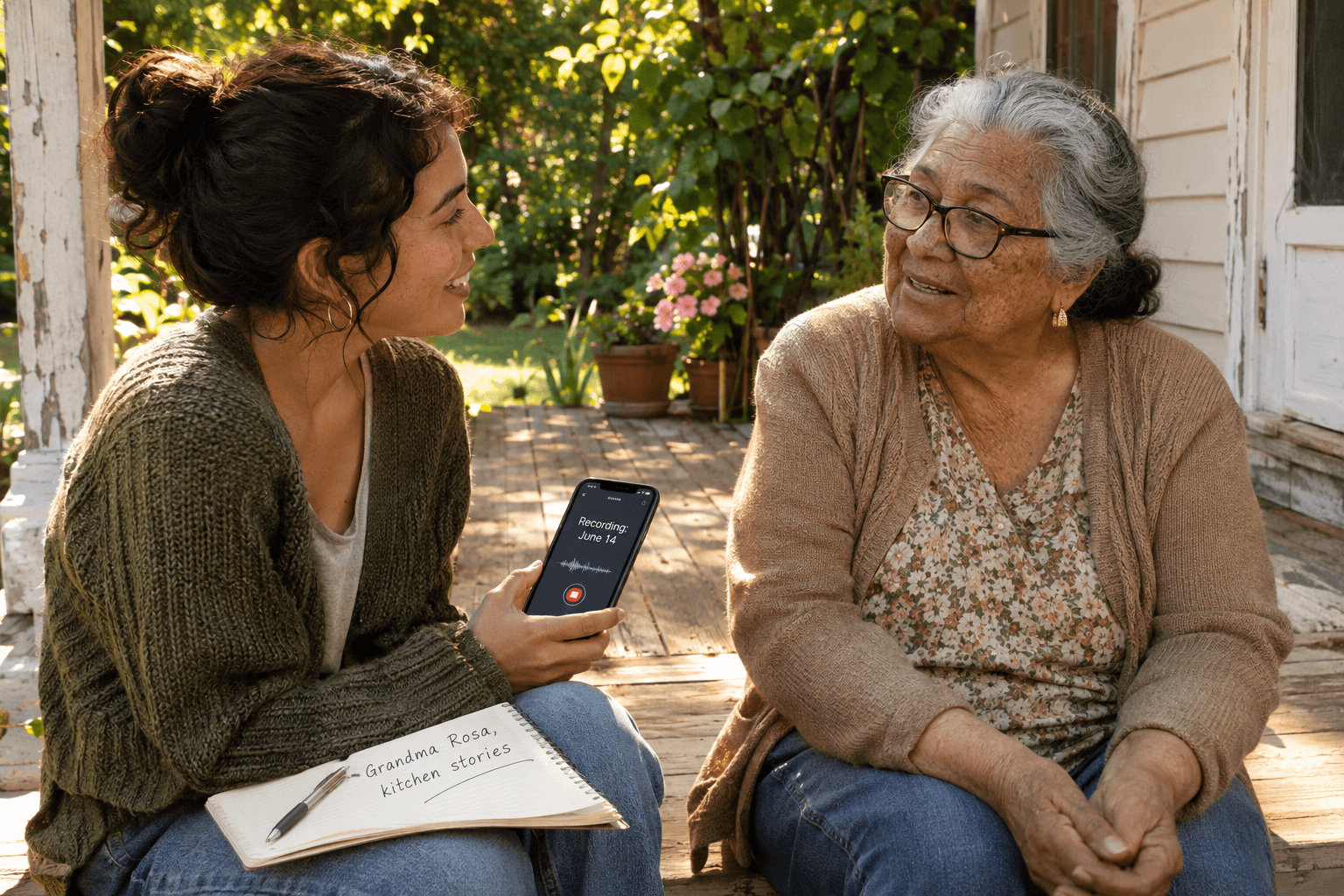
Somewhere in your grandparent’s memory is the smell of a kitchen you have never stood in, the name of a childhood best friend no one else remembers, and the real reason your family settled where it did. Most of those stories have never been written down. Many have never even been asked about.
The best questions to ask grandparents are rarely dramatic. What was your childhood home like? Who did the cooking? What did you do on a long summer afternoon? Asked gently and recorded in their own voice, simple questions like these become some of the most treasured things a family can keep.
This guide walks you through the whole conversation: how to bring it up without sounding urgent, what to record on, how long to talk, which questions to open with, what to do when answers get short or memories blur, how to respect stories that should stay private, and how to store the recording so someone can actually find it years from now. You do not need to capture a whole life in one afternoon. You only need to begin.
Key Takeaways
Lead with curiosity, not urgency: Tie the invitation to a photo, recipe, or place, and make it easy to say no, pause, or stop.
Use a recorder you have practiced with: A phone voice memo in a quiet room works well. Test recording and saving before you meet.
Keep sessions short and plan more than one: Stop when energy fades and invite them to continue another day.
Open with easy, concrete questions: Childhood homes, family dinners, and old friends warm up memory better than big life questions.
Protect memory and privacy: Let uncertain details stand, never argue, and agree together on what stays off the record.
Label and back up right away: Name files consistently, keep an untouched master copy, and store a second copy somewhere shared.
How to Bring It Up Without Saying You Are Running Out of Time
The kindest invitation is rooted in curiosity, not urgency. If a request sounds like a farewell, it can feel heavy for everyone. Connect it instead to something real: an old photograph you found, a recipe you want to get right, a question from your own child, or simple interest in the neighborhood where they grew up.
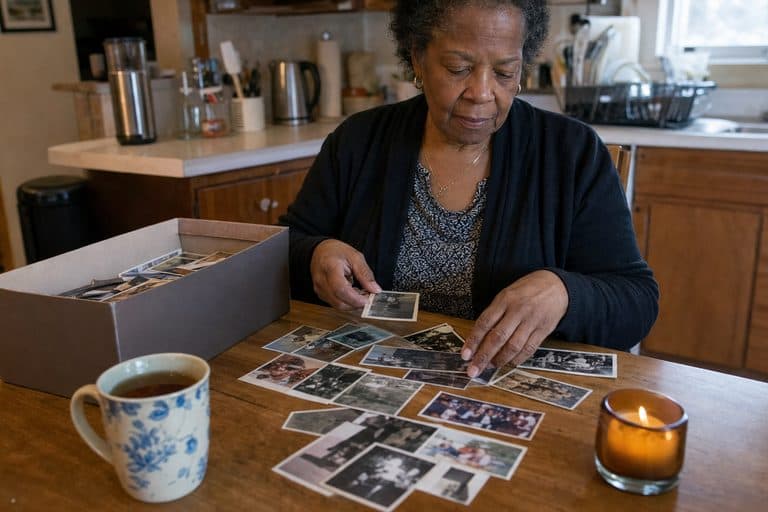
You might say, “I found this photo and realized I don’t know the story behind it. Could we look at it together next week?” Or, “I’d love to hear about the house you grew up in. Would you be up for talking about it sometime?” Both openings give your grandparent control over when, what, and how much.
You also do not have to press record on the first visit. The Smithsonian’s guide to doing a family oral history suggests making initial contact, explaining your project, and using a preliminary conversation to discuss logistics and build rapport and trust. For a family, that can be as simple as a relaxed visit where you mention the idea and leave the recorder in your bag.
Consent belongs in the invitation, not tacked on at the end. The Oral History Association’s guidance for interview participants says people should know how long an interview will take, how it will be recorded, how the material may be used, and whether they can review it before it is shared. It also makes clear that participants are free to skip questions, take a break from recording, or end the interview. Saying those things out loud often makes it easier for a grandparent to say yes.
What to Record On, and What Actually Works
The best equipment is whatever you can use without fumbling. A phone voice memo is often the least distracting option at a kitchen table. Video preserves expressions and gestures, and a recorded video call can bridge the distance when you live far apart. If recording feels too formal, handwritten notes still count, as long as you write down their exact phrases as soon as you can.
- Phone voice memo: simple, discreet, and often excellent for clear audio in a quiet room.
- Phone video: captures facial expressions, hands, and the way they tell a story, but can feel more formal.
- Recorded video call: useful for distant family. Test permissions and sound with them before the real conversation.
- Dedicated audio recorder: helpful for longer sessions, and it keeps your phone free for photos.
- Handwritten notes: a respectful alternative when someone prefers not to be recorded at all.
Whatever you choose, prepare it ahead of time. FamilySearch’s tips for interviewing grandparents recommend finding a quiet, calm environment and practicing recording and saving before the actual meeting. The Smithsonian family oral history guide adds that you should be comfortable with your equipment, have a dependable power source, and have enough memory for the interview. Charge the device, clear storage space, and silence notifications so a technical hiccup never interrupts a story mid-sentence.
How Long Should a Family History Interview Be?
There is no ideal running time, only the right amount of energy. The Smithsonian’s family oral history tips note that elders often get tired, advise stopping and beginning again another time when that happens, and recommend planning for multiple interviews. The same guide suggests having enough recording memory for 60 to 90 minutes, which is a sensible ceiling to prepare for, not a target to hit.
A shorter visit can be more generous than a long one. Twenty unhurried minutes about a first job or a favorite neighbor often holds more life than an hour spent racing through every decade. Watch for signs of fatigue, such as shorter answers, drifting attention, or a glance at the clock. Those are cues to wrap up warmly.
Before you leave, ask what they would enjoy talking about next time. That one question turns an interview into an ongoing ritual, and it gives your grandparent something to look forward to rather than something to get through.
The First Questions to Open With
The first questions to ask grandparents should be concrete and easy to picture. Big reflective questions can feel like a test at the start, while sensory, everyday memories warm things up. The Smithsonian guide recommends open-ended questions that begin with what, why, or where, rather than leading or yes-or-no questions. A photograph or familiar object on the table can help, too.
These openers, several adapted from FamilySearch’s list of good questions to ask your grandparents, tend to get people talking:
- What was your childhood home and neighborhood like?
- Who were your childhood friends, and what did you do together?
- What were family dinners like? What did you eat, and who did the cooking?
- What were your parents like? What is the most important thing they taught you?
- What were you like as a child? Did you ever get in trouble?
- What was your first job, and how did you get it?
- What did a summer afternoon look like when you were ten?
Save the bigger questions for the end, once trust and rhythm are established. The same Smithsonian oral history guide suggests closing with reflective prompts such as “What are you most proud of?” By then your grandparent has had time to settle in, and the answer often comes from a deeper place.
“Honor the sacred space of the interview. The oral history interview is built on mutual trust and respect. Be prepared for deep listening.”
How to Keep Them Talking When the Answers Get Short
Short answers do not mean the conversation has failed. Often a specific, gentle follow-up is all it takes. If your grandparent says, “We lived near the river,” you might ask, “What did the river look like in winter?” If they mention a sibling, try, “What was a typical afternoon together like?”
Useful follow-ups include “What happened next?”, “Who else was there?”, “How did that feel at the time?”, and “What do you remember seeing or hearing?” The Smithsonian’s family oral history guide encourages exactly this kind of follow-up, asking what an experience looked, smelled, or sounded like to draw out sensory detail. If words run dry, hand them a photograph and ask who took it, or what was happening just outside the frame.
One counterintuitive rule is worth remembering: do not fill every silence. A pause may be a person sorting through a memory, deciding what feels safe to share, or simply enjoying being heard. Wait a moment. If they seem tired, uncertain, or distant, move to something lighter instead of repeating the question. Good listening protects the relationship as much as it preserves the record.
What to Do When Their Memory Is Unreliable
A family interview preserves a person’s remembered experience. It is not a courtroom transcript, and it does not need to become a fact-checking session. If a date, place, or sequence seems uncertain, let the story stand as their memory of it. You can add a gentle note to the file, such as “Dates may be approximate,” and check family documents or other relatives later if precision matters.
If your grandparent lives with Alzheimer’s or another condition that affects memory, patience matters even more. The Alzheimer’s Association’s communication guidance advises giving the person time to respond, asking one question at a time, listening to their thoughts and feelings, and avoiding criticizing, correcting, or arguing. It also notes that changes in the ability to communicate vary from person to person and with the stage of the disease, so let your grandparent’s comfort set the pace.
When you feel the urge to correct a detail, try staying with the feeling instead. “It sounds like that house meant a great deal to you” honors the memory far more than debating the year a move happened. The emotion in a story is often the part your family will treasure most.
How to Handle Stories They Do Not Want Recorded
Every family has chapters that are painful, private, or still unresolved. Some of the most important moments in an interview are the ones where your grandparent says, “Turn that off for a minute.” When that happens, stop recording right away, and do not ask twice.
The Oral History Association’s guidance for participants is clear that people are not required to discuss topics that make them uncomfortable or cause distress, and that they can take a break from recording at any time. It also explains that interviews can be restricted from the public and even withdrawn, while cautioning that once a recording has been made public or placed in an archive, it may not be possible to fully remove it.
In practice, that means agreeing on simple levels before anything is shared: stories that are fine for the whole family, stories meant only for certain people, and stories that stay with you. The Smithsonian oral history checklist recommends having each interviewee sign a release form granting permission to be recorded. For a family project, a short written note of what you agreed can play a similar role and prevent hurt feelings later. Because a public post is hard to take back, wait for clear permission before putting anything sensitive online.
Trust Comes Before the Archive
If your grandparent asks you to stop recording, stop immediately. Ask whether notes are acceptable, whether the story should stay private, and who may hear or read it later. A meaningful family archive is built through trust, not by collecting every detail.
How to Label and Store the Recording So It Is Found Later
Labeling starts before you press stop. The Smithsonian’s interview tips recommend opening every recording with a spoken announcement of your full name and the date, time, and location, then having the interviewee identify themselves by full name, and repeating that introduction whenever you pause and restart. Years from now, those few seconds tell a listener exactly what they are hearing.
Next, give the file a name that will make sense to someone who was not in the room. A repeatable pattern works best: LastName_FirstName_Year-Month-Day_Place_Topic, such as “Garcia_Rosa_2026-06-14_Chicago_BakeryYears.” Putting the year first keeps files in date order in any folder. Add a short companion document listing the people mentioned, the main topics, and a few time markers, so a relative can jump straight to the story about the bakery or the first apartment.
Then protect it. The same Smithsonian guide says to create at least one backup copy immediately and keep the master copy in a secure location. FamilySearch points out that digital copies on shared servers can keep precious moments from being lost if your notes or phone are misplaced or damaged. For the long run, the National Archives guidance on reformatting audio and video says that storage capacity and a program to regularly check and back up digital content are required for files to persist over time, and that CDs are not the best choice for long-term preservation. Keep the master copy untouched, and use a second copy for listening, transcribing, or sharing.
Turning Their Stories Into a Lasting Legacy
One recording will not hold a whole life, and it does not need to. What matters is that their voice, their way of phrasing things, and their laugh are now safe in a place your family can return to.
Over time, those recordings can sit alongside photographs, recipes, and messages from relatives in one shared tribute. Our complete guide to creating an online memorial explains how families bring those pieces together. When you are ready, you can start an online memorial on Lovekept and invite relatives to add their own memories, compare current memorial plan options, and learn how a tree planted in their honor adds a living tribute to every published memorial.
If a goodbye does come, the stories you gathered will help you write an obituary for a grandmother or grandfather in their own words, or find a starting point in these eulogy examples for every relationship. Nothing written later will be as personal as the voice you save now. Start with one question this week, and let the rest follow.
Give Their Stories a Lasting Place
Bring recordings, photographs, and favorite memories together in a shared tribute that relatives can add to over time. Every published memorial includes a real tree planted in your loved one’s honor.
Create a MemorialFrequently Asked Questions About Interviewing Grandparents
A few practical questions families often ask before their first recorded conversation.
What if my grandparent refuses an interview?
Respect the answer without trying to persuade them. Leave the door open by saying you would welcome a conversation another time, or ask whether they would rather share a single photo, a recipe, or a written memory instead. Sometimes an informal chat with no recorder in sight becomes the start of something more.
Should I send questions in advance?
Often, yes. FamilySearch notes that preparing a list and sharing some questions before your visit can help you make the most of your time together. A short list gives your grandparent time to think and gather photos. Keep plenty of room for spontaneous follow-ups when you meet.
Is video better than audio?
Neither is automatically better. Video preserves expressions and gestures, while audio may feel less intrusive and is easier to manage. Choose the format your grandparent is comfortable with, and always ask permission before recording.
How do I interview a grandparent who lives far away?
A recorded video or phone call works well. Do a short test call first so you both know how the sound and recording settings work, and if possible ask a nearby relative to help with the setup on their end. Keep remote sessions a little shorter, since screens can be more tiring than sitting together.
Can I interview a parent or another relative instead?
Absolutely. A parent, aunt, uncle, cousin, neighbor, or longtime friend may remember different parts of a grandparent’s life. Ask each person for their own memories rather than trying to settle every difference between versions.
What should I do with sensitive family stories?
Ask what may be recorded, kept privately, shared with specific relatives, or left out entirely, and write down what you agree. Do not post a sensitive story to a memorial page or social media unless the storyteller has clearly agreed to that use, since a public post can be difficult to fully take back.
Sources
- Smithsonian National Museum of African American History and Culture, How to Do a Family Oral History
- Oral History Association, For Participants in Oral History Interviews
- FamilySearch, Good Questions to Ask Your Grandparents
- Alzheimer's Association, Communication and Alzheimer's
- National Archives and Records Administration, Reformatting Audio, Video, and Motion Picture Records
Lovekept's guides are drafted with AI against briefs written by the Lovekept team. Abdullah Nabeel, the founder, is the blog's editor. Read how we produce and correct content at /editorial-standards.