First Birthday in Heaven: Getting Through Their First Birthday
A first birthday in heaven can hurt more than the funeral. Gentle ways to plan the day, keep or change traditions, and ask people to say their name aloud.
Somewhere on your phone, a birthday reminder is probably still set. It has popped up quietly every year, and now it is about to go off for the first time since they died. This is the first birthday in heaven, the first birthday since you lost them, and for many people it lands harder than they braced for, sometimes harder than the funeral itself.
Maybe the date is circled on a kitchen calendar. Maybe you deleted the reminder months ago and the day still found its way into your chest anyway. However it arrives, this day asks something different of you than the funeral did. There are no arrangements to make this time, only the day itself and the space where they should be.
This guide walks with you through the weeks before the birthday, the traditions worth keeping or changing, the cake and the card and the empty chair, and the birthday messages that start appearing online. You do not need to get any of it right. The goal is simply to help you reach that day with a gentle plan already in hand, so you are not facing it on instinct alone.
Key Takeaways
Feeling worse around this birthday than you did at the funeral is a common, recognized grief reaction, not a sign that something is wrong with you.
Marking their birthday is a healthy way to keep your bond with them, not a step backward in your grief.
A simple plan made ahead of time, with room to change it, makes the day easier to face than leaving it entirely to chance.
Traditions can be kept, changed, or paused, and whatever you choose this year does not have to be your choice next year.
Telling people ahead of time that you want to hear their name said out loud takes the pressure off everyone around you.
Why Does the First Birthday Hurt More Than the Funeral?
The funeral comes wrapped in tasks, visitors, and enough shock to carry you through the worst of it. A birthday has none of that. There is no one arriving with casseroles and nothing to organize. The day exists for one reason, to celebrate that this person was born, so once they are gone, their absence becomes the whole point of the day.
Birthdays are also one of grief's most familiar triggers. Guidance from the U.S. Department of Veterans Affairs notes that grief tends to come in waves, and that birthdays, holidays, and anniversaries are among the things that commonly set it off. The VA's National Center for PTSD adds that private dates, like the date a loved one died, can bring back distress, and that you may dread the date and worry in advance that you will struggle.
That dread is often the heaviest part. The Dougy Center, a national grief center for children and families, observes that the anxiety and anticipation leading up to a hard season can be more intense than the day itself. Families tell us the same thing about first birthdays: the days before, and especially the night before, can feel heavier than the birthday once it arrives. There can be a strange relief in finally being inside the day instead of waiting for it.
And it does ease. According to the National Center for PTSD, most people feel better within a week or two after an anniversary, and over time the distress becomes less frequent and less intense. The first year is the steepest climb, and you do not have to make it alone.
“Grief is the price we pay for love.”
Is It Healthy to Celebrate the Birthday of a Deceased Loved One?
Yes. Celebrating the birthday of someone you have lost is healthy, and choosing not to mark it this year is just as valid. The ache so many people feel around this date is exactly what Queen Elizabeth II's message to grieving New Yorkers, remembered at Saint Thomas Church, put into words: grief is what love looks like once the person is gone. The bond has not ended. It has simply changed shape.
Grief thinking once assumed that healing meant slowly letting go. In 1996, Klass and colleagues challenged that idea with the concept of continuing bonds, which they described as an ongoing inner relationship with the person who died. A systematic review published in the International Journal of Environmental Research and Public Health looked at continuing bonds among people bereaved by suicide and found that most participants described these connections in largely positive terms, often through rituals and ceremonies that kept the person close.
Honoring the day is different from forcing yourself to feel cheerful on it. You can light a candle, say their name out loud, and still cry through dinner. Both belong in the same afternoon.
What matters more than any single birthday is how you are doing in the stretch around it. If the day, or the dread leading up to it, makes it hard to carry on with daily life, the National Institute on Aging encourages you to reach out to a support group, a mental health professional, or loved ones for support. Asking for help is not a sign that you are grieving wrong.
How to Plan the First Birthday Without Them in Advance
Planning ahead does not make the day less genuine. It just means you are not improvising through the hardest hours. The National Center for PTSD suggests making plans for the date, focusing on self-care, and leaning on your social support network, with ideas like visiting a grave, donating to charity, helping others, or spending the day with family.
For many families, one meaningful activity becomes the anchor for the whole day: their favorite meal, a visit to a place that mattered to them, or planting a memorial tree in their honor that will keep growing long after this year. The steps below can help you shape the day at whatever pace feels right.
Six Gentle Steps to Prepare
Decide what you need, two to three weeks out
Ask yourself honestly whether you want company, quiet, or a mix of both, and give yourself permission to change your mind as the day gets closer.
Ask the people closest to them
A partner, a sibling, and a child of the person you lost may each need something different from the day, so check in rather than assume.
Pick one anchor activity
Choose a single meaningful touchstone, such as their favorite meal, a visit to a place that mattered to them, or planting a tree in their honor.
Build in a way out
Plan an easy exit, whether that means leaving early or canceling altogether, so nothing traps you somewhere that starts to feel like too much.
Arrange support for the evening after
The hardest hour is often not the day itself but the quiet that follows once the effort of getting through it fades.
Tell others what you need in advance
Let friends and family know ahead of time whether you want them to mention your loved one's name, share a memory, or simply be present.
Which Birthday Traditions to Keep and Which to Change
There is no correct answer here, and whatever you decide this year does not bind you next year. Grief changes shape, and your traditions can too. The Dougy Center encourages grieving families to consider scaling back or changing things they did in the past, and to give themselves the right to do what they want, rather than what others expect. Here is how a few common traditions tend to play out.
- Singing "Happy Birthday": some families still sing it together as they always did. Others soften the song into a moment of silence, or hum it while lighting a candle.
- The birthday cake: keep the same flavor if it brings comfort, turn it into a new dessert entirely, or pause the cake this year and simply gather without one.
- Their favorite restaurant or meal: keep the standing reservation, recreate the meal they loved at home, or eat somewhere that carries no memories at all this year.
- The phone call you always made: call a sibling or friend at the same time instead, write them a letter, or let the hour pass quietly.
- Gifts: buy something you know they would have loved, give what you would have spent to a cause they cared about, or pause gift giving this year.
- The family party or gathering: keep the same guest list and setting, scale it down to something smaller and quieter, or spend the day alone or with just one or two people.
If you want more ideas beyond this list, these meaningful ways to honor a loved one who has passed away can help you find a ritual that fits your family.
What to Do With the Cake, the Card, and the Empty Seat
These three small decisions often carry the most weight on the day. The Dougy Center suggests families find ways to remember and honor the person, such as lighting candles, writing letters, setting a special place at the table, or sharing one of their favorite foods. Each of those ideas maps neatly onto the cake, the card, and the chair that used to be theirs.
The Cake
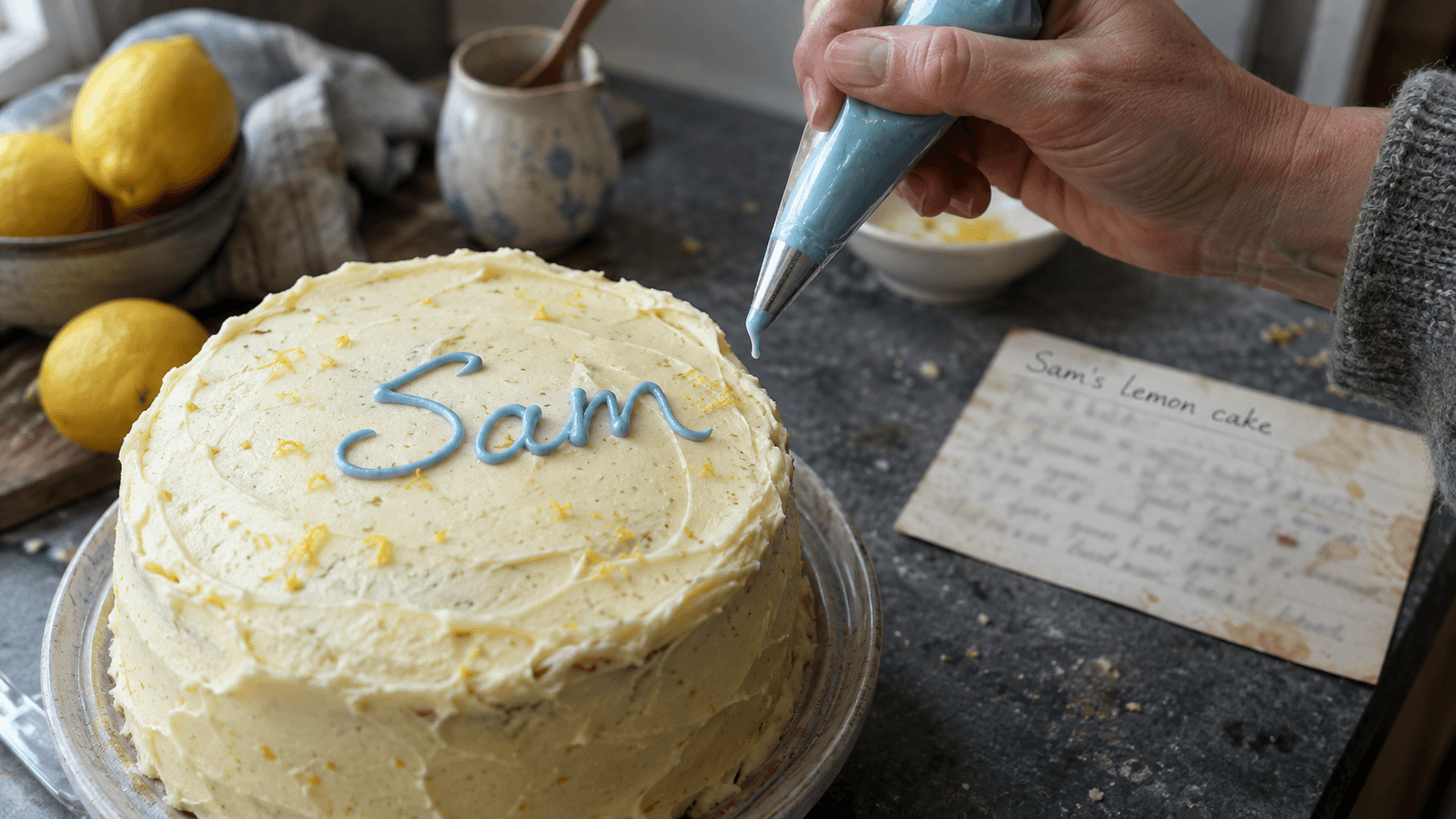
Bake their favorite cake if you want to, and ask each person at the table to share one memory before anyone cuts into it. Food has a way of opening people up to stories. Or skip the cake entirely this year. A cake is a tradition, not a requirement, and either choice is complete on its own.
The Card
Write them a card or letter anyway, even though they will never open it. Some families tuck it into a drawer to reread later, some read it aloud at the table, and some leave it at the grave or on a memorial page where others can add their own words. A single honest line is enough: "We miss you today more than most days. Happy birthday. We love you."
The Empty Seat
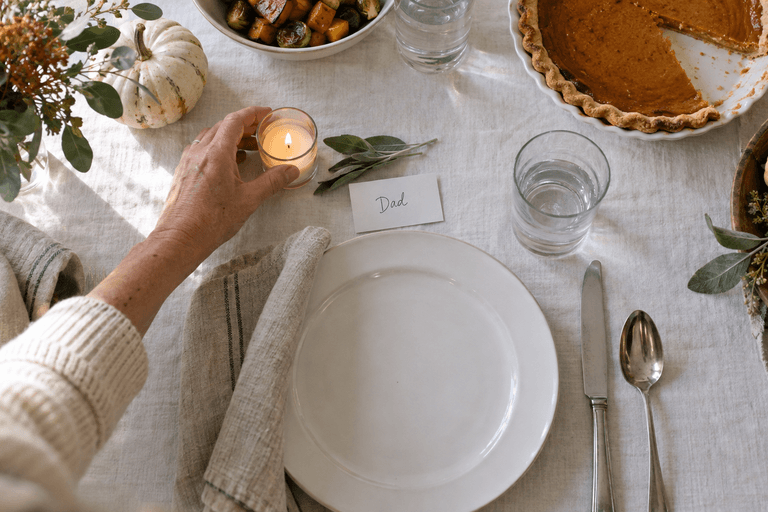
Decide before anyone arrives whether the seat stays empty, holds a framed photo, or is offered to someone your loved one adored, so no one is caught off guard mid-meal. Many families faced this same question during the first Thanksgiving without them, and the answer that worked at one table rarely matches the answer at another. What matters is agreeing on it together ahead of time.
How to Mark a Child's First Birthday After a Parent Died
A child's birthday belongs to the child first. Let them enjoy the day, and offer simple, optional ways to include the parent they lost rather than reshaping the whole party around grief. The Dougy Center's guidance on helping grieving children advises families to give children choices whenever possible, and that includes how, or whether, they want their parent woven into the celebration.
The same guidance recommends using honest, concrete words and staying sensitive to the child's age and language when questions come up. It also reminds families that children grieve in cycles, and that having fun or laughing is not disrespectful to the person who died. A child can laugh through party games and cry ten minutes later. Both are part of how children carry loss, even during a celebration.
Simple touches work well: a photo of their parent near the cake, a birthday memory shared by someone who knew them, or a letter or recording the parent left behind, if one exists. For a baby's first birthday, even a small gesture, like saying the parent's name during the birthday song, gives them a place in the day without asking the baby to understand any of it.
The surviving parent often carries the most complicated version of this day, wanting the party to feel normal for their child while missing the person who should be standing beside them. Both feelings are allowed in the same room.
What Do You Say When Someone Wishes Them Happy Birthday Online?
Two very different kinds of messages tend to arrive on their birthday: heartfelt "happy birthday in heaven" posts from people who knew and miss your loved one, and cheerful, automatic greetings from acquaintances who never heard the news. Both deserve a reply, but not the same one.
For someone who clearly knew them, a simple reply is enough: "Thank you for remembering her today. It means more than you know." For someone who did not know, a gentle, low-pressure note works: "Thank you. I should let you know she passed away last year, but I still love seeing her name come up."
Many social platforms offer some way to memorialize a profile, which can quiet automatic birthday reminders. How that works, and who can request it, changes over time, so check the current help pages for the platform you use rather than relying on older instructions.
A gentler long-term option is to create a free online memorial for the person you are remembering: one lasting place where birthday messages, photos, and stories can gather every year, instead of scattering across whichever app happens to be popular.
What Does "First Birthday in Heaven" Mean?
"First birthday in heaven" is a phrase families use for the first birthday of someone they love after that person has passed. It appears often in social media posts, on cards, and in faith communities as a way of marking the day while keeping the person present in it.
Parents also use the phrase for a baby who died before or around their first birthday, holding onto a milestone that was never celebrated in the usual way.
If the phrase does not fit your beliefs, there are other ways to say the same thing. "Their first birthday since" makes no assumption about an afterlife. So does naming the milestone plainly, as in "what would have been her 50th birthday." However you phrase it, the day is yours to mark in whatever way feels honest to you.
How to Let People Know You Want Their Name Said
Many friends go quiet on this day, not from indifference but from fear. The National Institute on Aging notes that people often hesitate to mention the name of the person who died because they worry it will be hurtful, yet many grieving people find it helpful to talk directly about their loss. Its advice is simple: let family and friends know when you want to talk about your loved one.
That means the kindest thing you can do for yourself, and for the people who love you, is to say it first. A short message a few days ahead gives everyone permission to speak.
A Message You Can Send
A few days before, try something like: "Their birthday is Saturday. It would mean so much to hear a story about them, or just see their name. Please don't worry about upsetting me. The silence is harder." If you have created a memorial page for them, share the link too, so people have somewhere to write down what they remember instead of wondering whether to say anything at all.
A Day You Get to Shape
The first birthday in heaven will probably be hard, and that is not a sign you are doing it wrong. It is a sign of how much they mattered. Whether you bake the cake or skip it, gather a crowd or sit quietly with a photo, you are still honoring them.
Be gentle with yourself in the days before and the days after. Say their name. Let other people say it too. And know that each year, the day can slowly become a little more about the life you celebrate and a little less about the space they left.
Give Their Birthday a Place to Gather
Create a free online memorial where friends and family can leave birthday messages in the guestbook, add photos and stories to their timeline, and return every year, not just on the hard days. When you publish it, a real tree is planted in their honor.
Create a Free MemorialSources
- U.S. Department of Veterans Affairs, Office of Patient Centered Care and Cultural Transformation, Grief Reactions, Duration, and Tasks of Mourning
- U.S. Department of Veterans Affairs, National Center for PTSD, Trauma Reminders: Anniversaries
- Dougy Center: The National Grief Center for Children & Families, Holidays & Grief
- Saint Thomas Church Fifth Avenue, New York, Grief is the price we pay for love.
- National Library of Medicine, PubMed Central (International Journal of Environmental Research and Public Health), Continuing Bonds after Loss by Suicide: A Systematic Review
- National Institute on Aging, National Institutes of Health, Coping With Grief and Loss
- Dougy Center: The National Grief Center for Children & Families, How to Help a Child Who is Grieving
Lovekept's guides are drafted with AI against briefs written by the Lovekept team. Abdullah Nabeel, the founder, is the blog's editor. Read how we produce and correct content at /editorial-standards.