What to Do When You Are the One Who Finds Them
What to do when you are the one who finds them: whether to touch the body, what to tell 911, why the police come, and where to find help for what you saw.
You Walked In, and They Were Already Gone
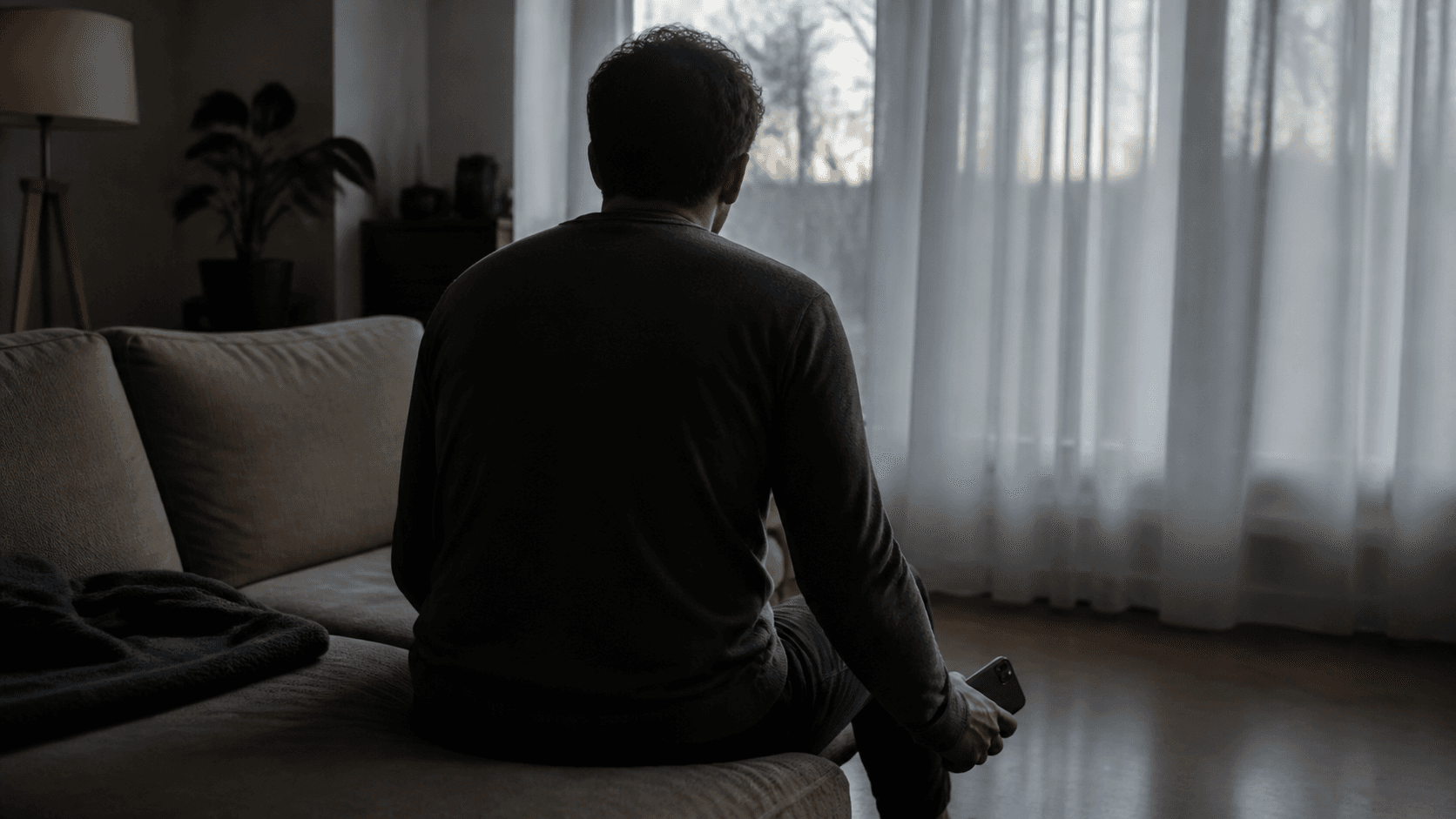
The room is too quiet. Maybe it's the recliner where they always sat, or the bed they never got up from, or the bathroom floor. Your phone is already in your hand, though you don't remember picking it up, and some part of you is still hoping you're wrong about what you're seeing.
This page is for you: the person who walked in and found them. Not the family who got the call an hour later, not the friend who heard the news at the funeral. The first hour after finding someone is disorienting in a way that grief alone isn't, and the questions arrive in a specific order. What do I do right now? What do I say to 911? Why are the police here? How long will my person stay in the house before anyone comes for them?
We'll take each one plainly and in order, starting with the question you may be standing over right this second. Once the immediate scene has settled, our guide to what to do in the first 24 hours after a death picks up where this one leaves off.
Key Takeaways
Call 911 first. Before you call anyone else, even if you're certain nothing more can be done.
Don't move or clean anything. Unless you're attempting CPR, the room may need to stay exactly as it is for now.
Expect the police. An unattended passing routinely brings officers, even when the circumstances seem obvious.
Expect a wait. Your loved one typically stays in the home for a few hours before the funeral home arrives.
Ask for a moment with them. You're allowed to ask for time before they're taken, and just as allowed to step outside if you need to.
The replaying images are treatable. Intrusive memories after finding someone are a known trauma response, not a sign something is wrong with you.
Should You Touch or Move the Body If You Find Them?
If there's any chance they're still alive, touch them. Check for breathing, feel for a pulse at the neck, say their name. Call 911 at the same time if you can, on speaker, so your hands stay free. If they aren't breathing, the dispatcher will coach you through chest compressions until responders reach you. In those first seconds, hesitating to touch someone costs far more than it protects.
If it's clear they're already gone, the answer flips. Leave everything exactly as you found it: their position, the medications on the nightstand, their glasses, a note, a spilled glass of water. The urge to straighten a blanket or move them somewhere more dignified is a loving one, and it's hard to resist. The room is briefly a record of what happened, though, and moving even small things can complicate the questions that come next.
This isn't about suspicion of you. It's simply how an unattended passing gets documented, and leaving the scene alone tends to make the next few hours shorter for everyone, including you.
There's one exception most guides skip. If your loved one was under hospice care and this was an expected passing, you aren't dealing with an unattended death in the same sense. You'll call the hospice line rather than 911, and the usual scene rules loosen considerably, because a clinician already anticipated this outcome. Our guide to what to do when someone dies at home walks through that hospice path in detail, alongside what changes when the passing wasn't expected.
What to Tell the 911 Dispatcher When You Find Someone Dead
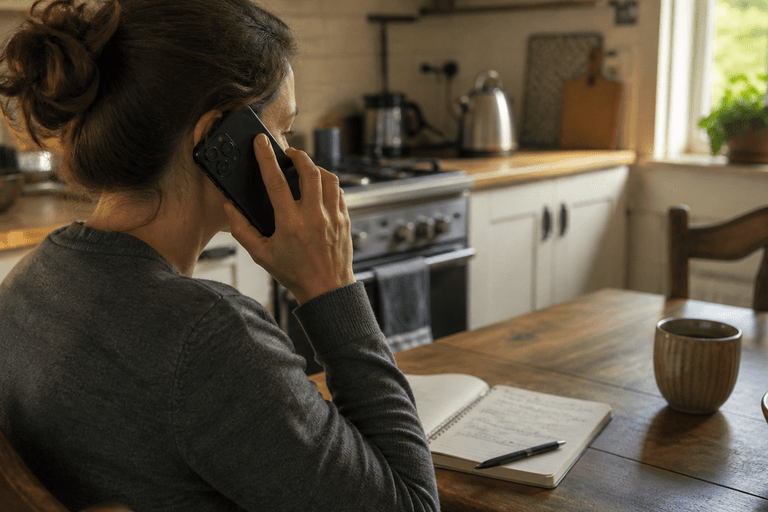
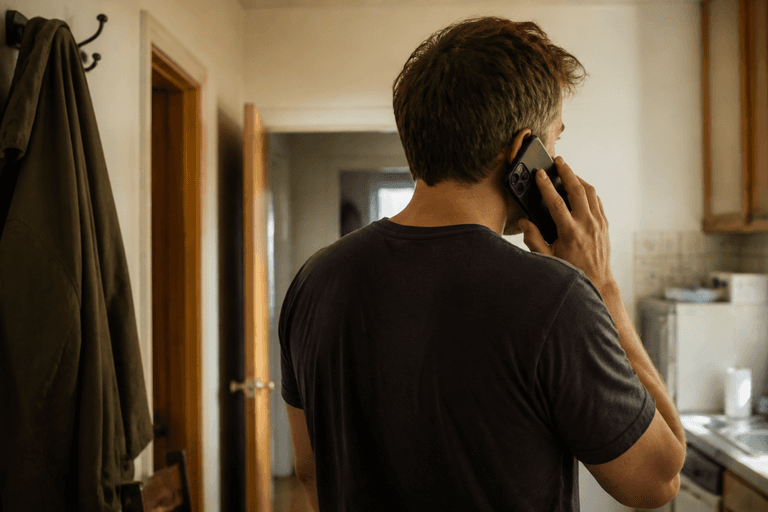
Give the dispatcher your street address before anything else, then say plainly that you've found someone who isn't breathing. Everything else can follow. Dispatchers are trained for exactly this call, and nothing you say, or the sound of your voice while you say it, is going to surprise them.
The call has a rhythm to it, even though it never feels like it will while you're in it. Here's the order most dispatchers walk callers through. For what happens once you hang up, including when the funeral home enters the picture, our guide on who to call first, and in what order lays out the sequence.
What to Say, In Order
Give the address first
Dispatchers can start help moving before you finish explaining. State the street address and city before anything else.
Say what you found
Tell them plainly that you found someone who isn't breathing and isn't responding. You don't need the right words.
Note whether it was expected
Say whether your loved one was under hospice care, or whether this was sudden. It changes who gets sent.
Describe, don't diagnose
Share what you can see: their position, their color, whether they feel warm or cool. Leave the cause to the people whose job it is.
Follow instructions or point to the paperwork
If CPR is called for, the dispatcher will coach you through it. If a DNR or POLST is posted somewhere, say where it is.
Stay on the line
Unlock the front door, put pets in another room, and stay on the phone until responders are inside.
Why the Police Come When a Death Is Unattended
Sometimes while you're still on the phone, sometimes a few minutes after, a patrol car pulls into the driveway. It can feel like an accusation arriving. It isn't. Any passing that happens without a doctor or nurse in the room is classified as unattended, and that classification is what brings officers, occasionally alongside a medical examiner investigator. It happens even when the circumstances seem completely clear to you: an elderly parent with a known heart condition, a spouse who had been declining for months. The category isn't a judgment about how your person died. It simply triggers a standard process.
What follows is usually brief and procedural. An officer looks over the scene, asks when you last spoke with your loved one, whether you touched or moved anything, and who else has a key to the home. They're building a timeline, not building a case against you.
Bereavement counselors see this pattern often: the person who found their loved one reads routine questioning as suspicion, and it adds a layer of fear to an already unbearable morning. Here's the part most guides don't say out loud. Being asked to repeat your account a second time, sometimes to a different officer, is standard practice, not a signal that something in your story raised a flag. Departments cross-check details out of habit, the same way they would for any unattended passing, including entirely peaceful ones. Knowing that in advance can take some of the sting out of a conversation that already feels like more than you can carry.
You're allowed to ask questions of your own while they're there. What happens next, who you should call, when you can start putting the room back together: officers field those questions constantly, and asking them reads as steady, never as evasive.
How Long Will They Leave the Body in the House?
Usually only a few hours. Nothing can move until the passing is formally pronounced, whether by responding paramedics, a medical examiner investigator, or a hospice nurse. Once that's done and officers have released the scene, the funeral home your family names can typically come for your loved one within a matter of hours. Our guide to what happens to the body between death and the funeral follows that sequence from pronouncement through transport and into the funeral home's care.
A few things stretch that window. If the medical examiner takes the case for further review, your person may be transported to their office rather than to a funeral home. If the coroner covering a large county is working through calls overnight, the wait can run longer than anyone would choose. Nobody is being careless with your loved one. The system is simply slower than grief is.
That wait becomes its own strange stretch of time. You're allowed to sit with them, hold a hand, and say the things you didn't get to say. You're just as allowed to wait in another room, on the porch, or in a neighbor's kitchen until it's over. There is no version of this hour that you're doing wrong, and no one is keeping score.
You'll Be Asked Which Funeral Home to Call
If your family hasn't chosen one yet, that's common, and it's fine to say so out loud. Responders can usually wait while you make a call, or the medical examiner's office can transport your loved one and hold them until the family decides. You are generally not obligated to use the first name someone happens to suggest, so take the few minutes you need.
What to Do If You Are Alone When You Find Them
Being alone for this is its own kind of hard. There's no one to confirm what you're seeing, no one to take the phone out of your hand, no one to catch you if your legs go. The impulse to do something, anything, can send you moving in circles through the house while the minutes blur.
Your only real job in the next few minutes is to keep yourself steady until another person is standing in the room with you. Everything else can wait. The list below is short on purpose.
If You're Alone Right Now
Stay on the phone with the 911 dispatcher rather than hanging up to call family. You can reach others once help is on the way.
Unlock the door and turn on the porch light so responders don't lose time getting to you.
Sit down somewhere steady ideally with a wall at your back. Your legs may not hold you the way you expect.
Call one person who can come to you, rather than broadcasting the news to a group. One steady voice is enough for now.
Don't drive yourself anywhere not to the hospital, not to a family member's house. Wait for someone else or for responders.
Drink water even if eating feels impossible. Shock is physical as well as emotional.
Ask a responder to stay with you until someone else arrives. It's a small request, and most will say yes without hesitation.
How to Tell the Family That You Were the One Who Found Them
Telling the rest of the family is, in its own way, the second hardest moment of the day. Start with whoever needs to hear it most urgently, a spouse, a parent, the person who lives closest, and lead with the fact itself before any detail: "I need to tell you that Mom has died. I was the one who found her." The specifics can come after, if they come at all.
You don't owe anyone a description of the room. A simple, honest line does the work: "I found her this morning, and I've already called 911. I'm not ready to talk through everything I saw, but I wanted you to hear it from me." That sentence protects you and still gives them what they need.
The question that follows, almost every time, is whether your loved one suffered. Answer honestly within what you actually know: "It looked peaceful," if that's true, or "I don't know yet, and the police are helping us understand what happened," if it isn't. You're allowed to say you don't know.
What grief counselors observe time and again is that the person who found their loved one quietly becomes the family's information desk, fielding the same questions from a dozen relatives in a single afternoon. That role is exhausting on top of everything else you're carrying, and it's both allowed and wise to hand it off. Ask one steady relative or friend to be the point person for updates. Then you can answer the hardest questions once, to one person, and spend the rest of the day simply grieving.
Where to Get Help After the Shock of Finding a Body
Something shifts in your body after you find someone. A jumpiness. A held breath. A feeling that doesn't quite match the word sad. Writers on grief have long noticed that this sensation sits closer to fear than to sorrow, and one of them said it more precisely than anyone since.
“No one ever told me that grief felt so like fear.”
That feeling has a practical explanation. Finding someone can leave a trauma response layered directly on top of ordinary grief, and the distinction matters more than most articles acknowledge. Ordinary grief aches and comes in waves. A trauma response intrudes: the moment you walked into the room replaying itself, trouble sleeping, an instinct to avoid that room or even the house altogether. Both are real. They just call for different kinds of support.
Grief support specialists often point people in your position toward trauma-focused therapy first, rather than a general grief support group, precisely because the images you're carrying need their own kind of processing before the wider work of grieving can move forward. That isn't a lesser path, and it isn't a sign you're handling this worse than anyone else would. It's simply the more accurate one.
As of 2026, several starting points in the United States are free and immediate. The 988 Suicide and Crisis Lifeline is available around the clock by call or text, and it's staffed for exactly this kind of acute distress, not only for situations involving suicide. SAMHSA's Disaster Distress Helpline offers similar around-the-clock support. If you're employed, check whether your workplace has an employee assistance program, since many cover a handful of counseling sessions at no cost. Hospital chaplains and first responder chaplains are trained for moments like this one too, and they can often be reached the same day.
One technique counselors suggest often is deliberately crowding out the last image with earlier ones: sitting with photos, voicemails, and stories from before that morning until they take up more room in your memory than the moment you found them. It's part of why some families begin a shared online memorial in the weeks that follow, gathering the pictures and stories that were always more true of who that person was. There's no hurry. The first days after finding someone are for getting through them, and the fuller remembering will still be waiting when you're ready for it.
What to Read Next in the First Days
You've made it through the hardest hour. Our guide to the first 24 hours after a death picks up from here, and it pairs well with our breakdown of who to call first, and in what order.
Read the First 24 Hours GuideQuestions People Ask After Finding Someone
These are the questions finders tend to ask quietly, often days later, once the initial shock has loosened its grip a little. If one of them is the thing you've been turning over at three in the morning, you are far from the only person who has asked it.
Lovekept's guides are drafted with AI against briefs written by the Lovekept team. Abdullah Nabeel, the founder, is the blog's editor. Read how we produce and correct content at /editorial-standards.