What to Do When Someone Dies at Home
What to do when someone dies at home: whether to call 911 or hospice, what police do, who pronounces the death, and how long they can stay at home with you.
When Someone Dies at Home, the First Thing to Know Is That You Have Time
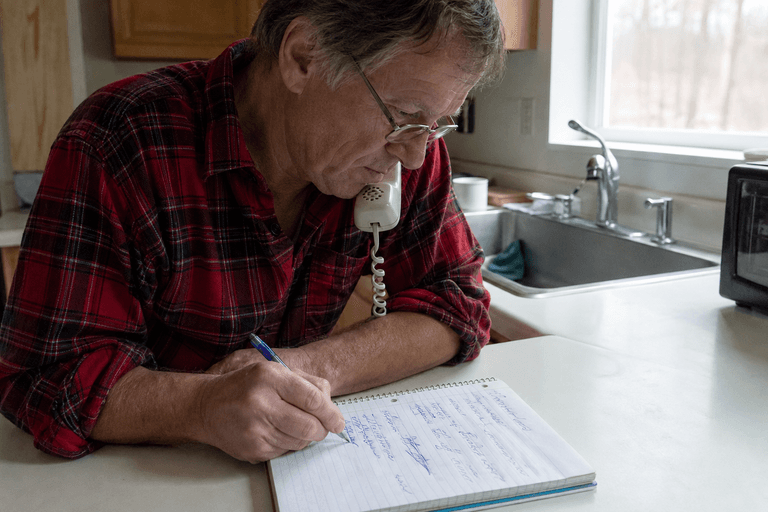
It is usually quiet when it happens. The house is still, the refrigerator humming in the next room, and then you notice that the breathing you have been listening for all night has stopped. Your hand finds the phone before your mind catches up, and one enormous question arrives ahead of all the others: what do you do right now?
The honest answer is that what to do when someone dies at home depends almost entirely on two things: whether the passing was expected, and whether hospice was involved. If it was, this is not an emergency. It is a series of calm, sequential steps, and in most cases no clock is counting down the minutes. If the passing was sudden, the steps are different but still knowable, and none of them ask you to be anything other than a person in shock doing your best.
This guide walks through those steps in the order you will actually need them: who to call first, what police do when they are involved, who is legally allowed to pronounce a death, how long your loved one can stay in the home with you, who eventually takes them into their care, and what to do with the room and the medications once the house goes quiet again.
Key Takeaways
Call hospice first. If your loved one was enrolled in hospice, call the agency's 24 hour line before anyone else, not 911.
Call 911 for the unexpected. If the passing was sudden, or hospice was never involved, call 911 and let responders take it from there.
Make the DNR visible. Keep a do not resuscitate order or POLST where responders will actually see it, not filed away in a drawer.
Police are procedure, not suspicion. Officers routinely respond to any unattended passing, and their questions are standard, not accusatory.
Pronouncement rules vary by state. Who may legally pronounce a death is set state by state, so the answer depends on where you live.
You have more time than you think. In most states, nothing legally forces your loved one to leave the house within minutes.
Do You Call 911 or Hospice When Someone Dies at Home?
If your loved one was enrolled in hospice, call the hospice agency's 24 hour line, not 911. If the passing was unexpected, or nobody was on hospice, call 911. That single decision shapes everything that happens in the next hour, so it is worth understanding what each call sets in motion.
A 911 call summons emergency medical responders whose job, absent a valid do not resuscitate order in hand, is to attempt resuscitation. For a family whose loved one slipped away peacefully after a long illness, that is rarely what anyone wants, and it can also bring a police response that a hospice family does not need.
A call to hospice sets a gentler process moving instead: a nurse is dispatched, no resuscitation is attempted, and no uniforms need to fill the room unless you want them there. This first call is only the beginning of a long day, and the wider sequence that follows it, from notifying family to meeting with the funeral home, is laid out in our guide to what to do in the first 24 hours after a death.
Whichever number you dial, the person on the other end of the line needs a few things quickly: who you are to the person who died, that they have died, and whether this was expected. If hospice is involved, give the agency's name. If a do not resuscitate order or POLST exists, say so plainly and keep it within reach. Those few sentences are enough to get the right kind of help moving toward you.
Keep the DNR or POLST Where Responders Can See It
A do not resuscitate order sitting in a filing cabinet upstairs might as well not exist. In most states, responders are required to begin resuscitation unless a valid out of hospital DNR or POLST is presented at the scene. Keep the original on the refrigerator, in the hospice folder, or with your loved one, not tucked away. Form names and requirements differ by state, so confirm your state's current rules or ask the hospice team which document you need.
What Happens Differently If the Death at Home Was Expected
An expected passing at home, especially one under hospice care, is handled by the hospice team rather than by emergency services. There is no ambulance at the curb and no sirens outside the window. A nurse comes to you instead.
That nurse typically arrives within roughly an hour or two, though the window depends on the agency and how far they have to travel. Once there, the nurse confirms the passing, notifies the attending physician, and arranges for the safe disposal of any controlled medications in the home. The funeral home is not called automatically the moment your loved one dies. It is called when you say you are ready, whether that is twenty minutes later or several hours later.
There is also a middle case worth knowing about: an expected passing where hospice was never involved. Here, the county's rules and the physician's willingness to certify the cause of death determine what happens next. Some physicians will certify remotely based on a person's known medical history, while others require police or the medical examiner to be notified regardless. It varies enough from place to place that it is worth asking your loved one's physician ahead of time, if there is time to ask.
When families come to us after a loss, the detail that surprises them most is how much of this pace they actually control. Nobody is rushing you off the phone or out of the room. The hospice nurse's arrival, the timing of the funeral home call, even how long you sit beside your loved one before either happens, these are largely yours to decide.
What Do Police Do When Someone Dies at Home?
If hospice was never part of the picture, the call you made brings a different group of people to the door. For an unattended or unexpected passing, officers respond to document the scene, rule out anything suspicious, and notify the medical examiner or coroner. This is standard procedure for any death that happens outside of medical supervision, not a sign that anyone suspects wrongdoing.
In practice, that usually looks like:
- Questions about when you last saw your loved one alive
- Questions about their medical history and current medications
- Photographs of the room
- A request that nothing be moved or cleaned until the scene is released
It can feel invasive in a moment that is already raw, but the questions are a checklist, not an interrogation. Here is the reframe most articles skip: being questioned is procedure, not accusation. Officers ask nearly identical questions at every unattended passing, whether the person was ninety and living alone or forty and found by a roommate. And when hospice attended, police are usually not involved at all, because the passing was expected and a medical professional was already there to confirm it.
Either way, one step still has to happen before anything else can: someone with legal authority has to make the passing official.
Who Pronounces the Death When Someone Dies at Home?
Pronouncement rules are set state by state. Depending on where you live, the person legally allowed to pronounce a death might be a physician, the medical examiner or coroner, a responding paramedic acting under local protocol, or a registered nurse, which is why a hospice nurse can often handle this step right at the bedside.
Here is the distinction most families never hear until they need it: pronouncement is simply the declaration of time, the official moment someone with legal authority says a person has died. Certification is different. That is when a physician or medical examiner signs the cause of death on the death certificate, and it is frequently done by an entirely different person, sometimes hours or days later, based on the person's medical records.
The practical consequence is that transport, the death certificate, and every arrangement that follows all wait on pronouncement happening first. Nothing moves until someone with the legal authority says the words. If you are not sure who that will be in your situation, ask the hospice team or the responding agency directly. It is a fair question, and they answer it often.
“You matter because you are you, and you matter to the end of your life. We will do all we can, not only to help you die peacefully, but also to live until you die.”
How Long Can the Body Stay at the House?
In most U.S. states, there is no law requiring your loved one to leave the house within a set number of minutes. Families routinely spend an hour, or several, sitting with their person before ever calling the funeral home. That time is yours, and no one should rush you out of it.
What actually sets the pace is a combination of nature and law. Natural changes to the body begin within a few hours, and most states have rules requiring refrigeration, embalming, or final disposition within a defined window, which as of 2026 is typically measured in a day or two, though the exact figure varies by state. Your hospice nurse, funeral home, or state health department can confirm the current rule where you live.
A few practical notes that families ask us about often. Lowering the room temperature can slow the pace of natural changes if you want more time before calling the funeral home. Home vigils, sometimes called a home funeral or after death care, are legal in most states, though a small number require a licensed funeral director to handle certain filings even if the family keeps the person at home. And if the medical examiner takes jurisdiction, whether because the passing was unattended, unexpected, or simply requires further review, the timing is no longer the family's to choose. In that case, the medical examiner's office sets the schedule.
When Someone Dies at Home, Who Takes the Body?
When you are ready, the funeral home or cremation provider your family chooses sends a removal team, usually two people arriving with a cot, to bring your loved one into their care. If the medical examiner has taken jurisdiction, a county transport service goes first and brings your loved one to that office, and the funeral home collects them afterward, once the examiner releases them.
When you call a funeral home for the first time, they will typically ask for:
- Your loved one's full legal name
- Date of birth
- Social Security number
- Next of kin
- Their physician's name
- Whether the family is planning burial or cremation
It helps to have those details written down in one place, since you will be asked for them again and again over the coming days. Much of the same information eventually feeds the obituary, which is why some families jot it into our AI-assisted obituary writer while it is fresh, and leave it there until they are ready to write.
One thing worth saying plainly: you are never obligated to use the first provider that hospice or the police happen to mention. Removal fees vary by distance and time of day, and as of 2026, federal rules require funeral providers to give you an itemized price list on request, so it is entirely reasonable to call more than one before deciding. When you do turn to the obituary itself, the rest of the details worth gathering, dates, survivors, and service preferences, are collected in our checklist on what to include in an obituary.
What to Do With the Room and the Medications Afterward
Once the house empties out, two practical tasks tend to surface: what to do with the medications, and what to do with the room. Neither one has to happen today.
If hospice was involved, the nurse commonly destroys controlled substances at the home before leaving and documents that it was done, which takes the decision off your hands entirely. If hospice was not involved, the safest route is a pharmacy take back kiosk or a DEA National Prescription Drug Take Back Day event, held twice a year as of 2026. Do not assume every medication can be flushed. The FDA maintains a current flush list covering a short set of high risk medications, mostly opioid patches and tablets, and it is worth checking that list rather than guessing.
The room itself can wait. Rented medical equipment, hospital beds, oxygen concentrators, wheelchairs, generally goes back to the supplier or hospice agency once you call to arrange pickup. But grief counselors tend to advise against stripping the room in the first days. There is no prize for speed, and undoing a space too quickly can feel like erasing someone before anyone is ready. If you think you might want to remember the room as it was, photograph it before anything is disturbed, then let the person who lived alongside the loss set the pace, even if that means closing the door for weeks.
When the time feels right, whether that is weeks or months from now, our guide to meaningful ways to honor a loved one who has passed away covers what many families eventually do with the belongings left behind, and some choose to mark the loss with a small, living gesture like planting a tree in their honor.
When You Are Ready for What Comes Next
Almost every family we hear from asks some version of the same question afterward: did I do this right? Did I wait too long, call too soon, miss something I should have caught? The hours after a passing at home are disorienting by nature, and the questions that follow you around are a sign of how much you cared, not evidence of anything you got wrong.
There was never a version of this you were meant to perform perfectly. The calls get made, the forms get filed, the room stays exactly as it is until you decide otherwise. Your loved one was home, among people who loved them, and that is the part worth carrying forward. Everything else can be taken one hour at a time.
There's More of the Day Still Ahead
This guide covers the hours right after a passing at home. Our companion guide walks through everything else the first day tends to bring, from notifying family to meeting with the funeral home.
Read the First 24 Hours GuideLovekept's guides are drafted with AI against briefs written by the Lovekept team. Abdullah Nabeel, the founder, is the blog's editor. Read how we produce and correct content at /editorial-standards.