How to Write an Obituary for a Mother: Templates and Examples
Learn how to write an obituary for a mother, with heartfelt templates, real examples, and gentle guidance to honor her legacy and the family she loved most.

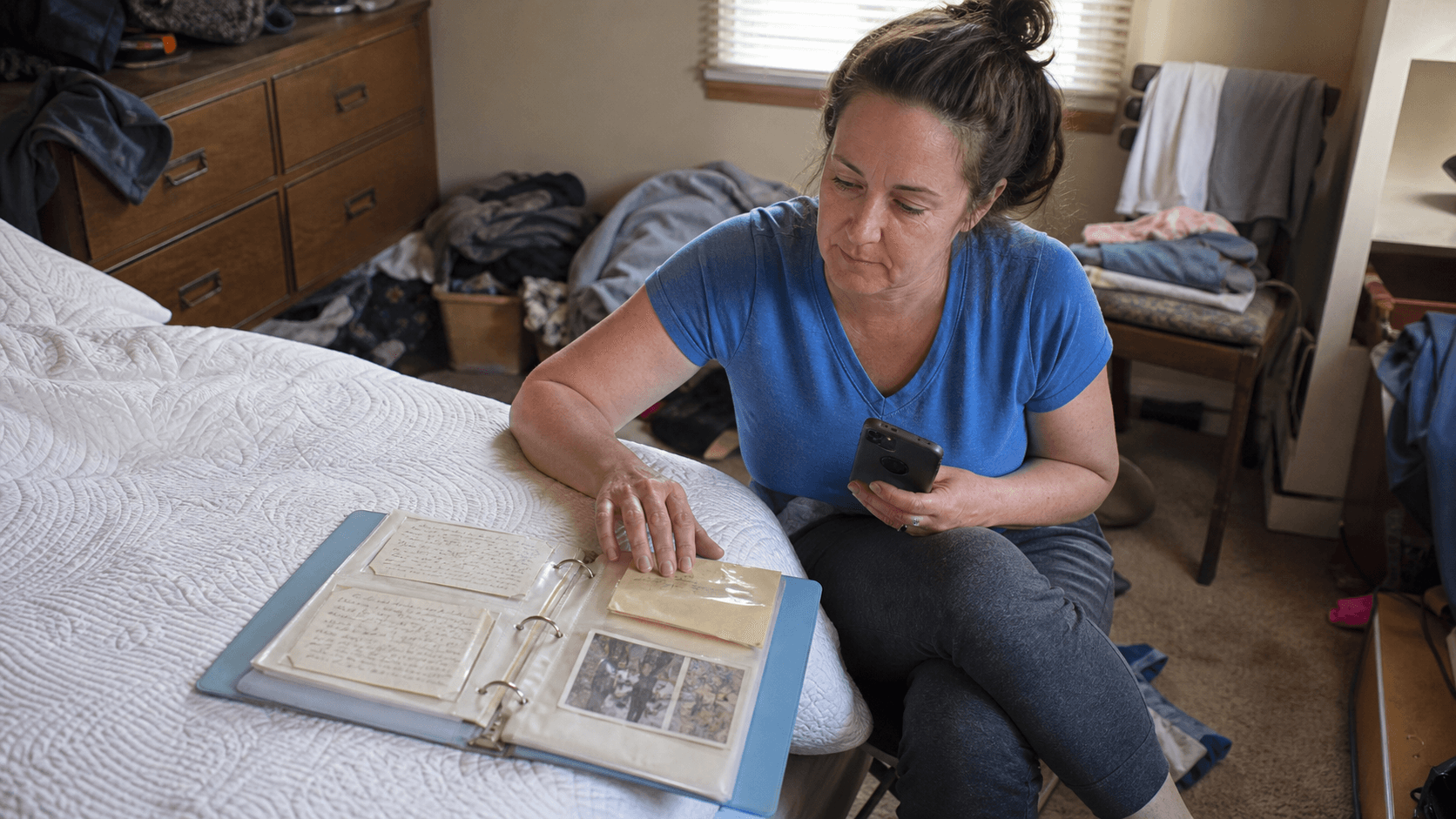
You are sitting at your mother's kitchen table, the one where she rolled out pie dough every Thanksgiving and read the newspaper with her coffee every morning, and you are staring at a blank page. Somewhere on that page, you are supposed to sum up her entire life: the woman who taught you to ride a bike, who showed up to every recital even when she was exhausted, who somehow made a small house feel like the safest place on earth. Writing an obituary for a mother is one of the hardest kinds of writing there is, not because the words are complicated, but because no words feel big enough.
When families come to us after a loss, this is one of the first hurdles they mention. They know their mother deserves a tribute that captures her warmth, her humor, and her stubborn, steady love, but grief has a way of making even simple sentences feel impossible to finish. You do not have to find the perfect words alone, and you do not have to find them all today.
This guide walks you through exactly what to include, how to capture your mother's personality and voice on the page, and how to handle sensitive details like survivors and cause of passing with care. You will find fill-in-the-blank templates for short, long, religious, and celebration-of-life obituaries, along with full example obituaries you can adapt in minutes. Take this one step at a time. There is no deadline on love.
Key Takeaways
Personality over paperwork. The best obituaries capture who your mother was through stories and small details, not just a list of dates and titles.
Match the style to her spirit. Choose a short, long, religious, or celebration-of-life template based on how she lived and how your family wants to remember her.
List survivors thoughtfully. Follow a gentle, conventional order for naming those she leaves behind and those who preceded her in passing.
Involve siblings early. Gathering memories together and reaching consensus as a family prevents hurt feelings and creates a fuller portrait of her life.
Share only what feels right. You are never required to include cause of passing or other private details. A loving tribute can focus entirely on how she lived.
Before you sit down to write, it helps to know exactly what to include in an obituary for a mother. Gathering these pieces first makes the actual writing feel far less overwhelming, and if you would like a running start, you can begin with our guided obituary writer and personalize the rest from there. Here is what to gather.
What to Include in an Obituary for a Mother
Full Name, Nicknames & Titles
Include her full legal name, any maiden name, and the nickname family and friends actually used, like Grandma Jo or Mimi, so the people who loved her recognize her immediately.
Key Life Dates
Note her birth date, birthplace, and the date of her passing. These anchor the obituary in fact and help family historians in years to come.
A Short Biographical Summary
A few sentences on where she grew up, her education or career, and major life milestones like marriage or moving to a new city give context to the fuller story.
Her Passions & Personality
This is where she truly comes alive: her hobbies, favorite traditions, sense of humor, and the small quirks that made her unmistakably her.
Survivors & Family
List those she leaves behind and, separately, those who preceded her in passing, following the gentle conventions covered later in this guide.
Service & Memorial Details
Share the date, time, and location of any visitation, funeral, or celebration of life, along with any requests such as donations in lieu of flowers.
How to Describe Your Mother in an Obituary: Capturing Her Personality and Voice
A list of dates and job titles can tell someone when your mother lived, but it cannot tell them how she lived. What grief counselors observe time and again is that the obituaries families treasure most, the ones they reread years later, are the ones that sound like the person they knew. If your mother always answered the phone with the same silly greeting, or hummed while she cooked, or kept a stash of butterscotch candies in her purse for exactly this reason, that belongs in her obituary far more than her exact job title from decades ago.
Start by collecting sensory memories rather than facts. What did her kitchen smell like on a Sunday? What song did she sing off-key in the car? These small, specific details do more to capture a person than broad adjectives like loving or kind ever could. Ask siblings, grandchildren, and close friends to send you one memory each. You will be surprised how quickly a fuller picture of her forms.
Borrow her own words when you can. If she had a favorite saying, a piece of advice she repeated at every holiday, or a phrase she used to sign off letters, weaving it into the obituary lets her voice come through directly, not just yours. It also gives readers who knew her a small, warm jolt of recognition, the sense that she is speaking one more time.
Finally, read your draft out loud. If it sounds stiff or overly formal, try writing the way you would describe her to a close friend over coffee, then tighten it from there. For more inspiration on capturing a life in words, our guide to meaningful ways to honor a loved one offers additional approaches you can weave into the obituary itself or into the memorial you build around it.
“I've learned that people will forget what you said, people will forget what you did, but people will never forget how you made them feel.”
Fill-in-the-Blank Obituary Templates for Mom: Short, Long, Religious, and Celebration of Life
Every family and every mother is different, so no single template fits every tribute. Below are four styles you can adapt: a short obituary for space-limited newspaper listings, a longer traditional version with more room for her story, a faith-centered template for families who want to honor her beliefs, and a celebration-of-life template for those who prefer a warmer, less formal tone. Copy the bracketed sections into your own draft and replace them with her details.
Short Obituary for a Mother: Template and Example
A short obituary works well for newspaper listings with tight word or line limits, or for families who prefer something simple and unadorned. It hits the essentials: name, dates, key survivors, and one warm sentence about who she was.
[Full Name], [nickname if applicable], of [city, state], passed away on [date] at the age of [age]. She was the beloved [mother/wife/grandmother] of [names]. Born on [birth date] in [birthplace], she was known for her [defining quality, such as warmth, humor, or faith]. She is survived by [names of survivors] and was preceded in passing by [names]. A [service type] will be held on [date] at [location]. In lieu of flowers, the family requests [donation request or alternative].
Here's how that might read in practice: Margaret 'Peggy' Ellis, 78, of Dayton, Ohio, passed away peacefully on March 3, 2026. She was the beloved mother of three and grandmother of seven, known for her Sunday pot roasts and her unstoppable laugh. She is survived by her children, Mark, Susan, and David, and her seven grandchildren. She was preceded in passing by her husband, Robert. A memorial service will be held Saturday at First Community Church. In lieu of flowers, the family asks for donations to the local food bank she volunteered with for over twenty years.
Long, Traditional Obituary Template
A longer, traditional obituary gives you room to tell her story chronologically: where she grew up, her career or family life, her hobbies, and the milestones that shaped her. This style suits families who want a fuller written record for future generations.
[Full Name] ([maiden name if applicable]), [nickname], was born on [birth date] in [birthplace] to [parents' names]. She grew up in [details about childhood, if known]. On [date], she married [spouse's name], and together they [shared life details, children, moves, milestones]. [Name] worked as a [profession or role] for [years/company], and was known throughout her community for [volunteer work, hobbies, passions]. She loved [specific interests, such as gardening, painting, her book club, or cheering for her grandchildren at games]. [Name] passed away on [date] at [location], surrounded by [family present]. She is survived by [full list of survivors, including children, grandchildren, siblings]. She was preceded in passing by [names]. A [visitation/service/funeral] will be held on [date] at [location]. The family invites you to celebrate her life by [specific request, such as sharing a memory, planting a tree, or donating].
Religious or Faith-Centered Template
If faith was central to your mother's life, a faith-centered obituary weaves her beliefs and community into the narrative rather than treating them as a single line. This style often includes a favorite scripture, hymn, or spiritual phrase she lived by.
[Full Name] was called home to be with [the Lord/her Creator/faith-specific phrase] on [date], at the age of [age]. A devoted member of [church/synagogue/temple/mosque name] for [number] years, she found strength and comfort in her faith, especially through [specific practice, such as a prayer group, choir, or volunteer ministry]. Her favorite [scripture verse, hymn, or saying] was [quote], which she shared with anyone who needed encouragement. [Name] is survived by [survivors] and was preceded in passing by [names]. A funeral [Mass/service] will be held at [location] on [date], followed by [burial or reception details]. The family finds comfort in knowing she is at peace, and invites you to honor her memory by [specific request].
Celebration-of-Life Template
A celebration-of-life obituary trades formal structure for a warmer, more conversational tone, often written as if speaking directly to her. It fits families who want to focus on joy, humor, and the specific things that made her unmistakably her.
[Name] lived a life full of [defining qualities, such as laughter, adventure, or generosity]. She would want to be remembered not for [what she wasn't] but for [what she was]: the [specific role or trait, such as the neighbor who always had extra tomatoes to share, or the friend who remembered every birthday]. On [date], she left us peacefully, surrounded by [family/friends], ready for her next adventure. She leaves behind [survivors], who will carry on her [tradition, value, recipe, or saying]. Join us to celebrate [Name]'s life on [date] at [location], where we will [specific activity, such as sharing stories, eating her favorite dish, or planting flowers in her garden].
Loving Obituary Examples for a Mother Who Loved Her Family
Templates are useful scaffolding, but sometimes it helps to see a finished tribute from start to finish. Here are three complete example obituaries, each written in a different tone, that you can use as a model or adapt directly for your own mother.
A Warm Example for a Mother Who Loved Her Family
Carol Anne Whitman, 82, of Asheville, North Carolina, passed away peacefully at home on April 12, 2026, surrounded by the family she loved more than anything in this world. Carol Anne was the heart of every holiday, the keeper of the family recipes, and the first person to answer the phone no matter what time you called. She married her high school sweetheart, James Whitman, in 1965, and together they raised four children in the same yellow house on Maple Street where she lived for over fifty years. Carol Anne spent her days gardening, hosting Sunday dinners that never had an empty chair, and cheering louder than anyone at her grandchildren's soccer games. She is survived by her children, Linda, Robert, Susan, and Michael; her twelve grandchildren; and her three great-grandchildren, all of whom knew exactly what it felt like to be loved by her. She was preceded in passing by her husband, James, and her sister, Dorothy. A funeral service will be held on April 18 at Grace Community Church, followed by a reception at the family home. In lieu of flowers, the family asks that you plant something in your garden this spring and think of her.
A Faith-Centered Example
Eleanor Grace Simmons was called home to be with the Lord on June 8, 2026, at the age of 89. A lifelong member of St. Andrew's Baptist Church, Eleanor sang in the choir for over sixty years and rarely missed a Wednesday prayer meeting, even calling in when she was too ill to attend in person. Her favorite hymn, It Is Well with My Soul, was playing softly in the room when she passed. Eleanor raised five children with her late husband, Charles, teaching each of them to say grace before every meal and to leave the world a little kinder than they found it. She is survived by her children, David, Ruth, Charles Jr., Anna, and Paul; fourteen grandchildren; and a church family who considered her a second mother. She was preceded in passing by her husband, Charles, and her parents. A funeral service will be held at St. Andrew's Baptist Church, with burial to follow at Restview Cemetery. The family gives thanks for the assurance that she is now at peace, and invites all who loved her to share a favorite memory at the reception following the service.
A Celebration-of-Life Example
If you knew Diane Marie Osei, you knew her laugh before you saw her face. Diane lived eighty-one joyful years, and she spent most of them making sure everyone around her felt like family, whether they were blood relatives or the neighbor she had only just met. She loved dancing in the kitchen, wearing outrageously bright colors, and telling stories that got a little taller every time she told them. On May 2, 2026, Diane left us peacefully, ready for whatever adventure comes next. She leaves behind her children, Kwame and Adjoa; her five grandchildren, who inherited her stubbornness and her sense of humor in equal measure; and countless friends who called her Auntie Diane whether they were related to her or not. Please join us on May 10 at Riverside Park, where we will share her favorite jollof rice, play her favorite music, and celebrate a woman who never once let a room stay quiet for long.
However you shape her story, the goal is the same: to help anyone reading it feel, even briefly, like they knew her too.
Let Us Help You Put It Into Words
If the blank page still feels heavy, you do not have to fill it alone. Share a few details and memories, and our AI-assisted obituary writer will turn them into a heartfelt first draft you can personalize until it sounds just like her.
Try Our Obituary WriterFamily Matters: Listing Survivors, Involving Siblings, and Handling Sensitive Details
An obituary is never just about one woman. It is about the web of people she loved and who loved her back. Getting this part right, both the order of names and the tone around difficult topics, matters more than most people expect.
Listing Survivors
Convention typically lists survivors in this order: spouse or partner first, then children (often oldest to youngest, though birth order is not required), followed by grandchildren, siblings, and other close relatives. Those who preceded her in passing, meaning family members who passed before her, are usually listed separately, often introduced with a phrase like she was preceded in passing by. For blended families, list stepchildren and in-laws by name alongside biological children rather than separating them into a lesser category. If she considered someone family, whether by blood, marriage, or simply by love, that person belongs in the obituary.
Involving Siblings
If you have siblings, involve them early, even if it means the writing process takes a little longer. Send a simple message asking everyone to share one or two memories, favorite phrases, or details they feel are essential. This does two things: it gives you richer material to work with, and it prevents the hurt that can come from a sibling feeling left out of how their mother is remembered. If disagreements arise about tone or what to include, it often helps to remember you are not writing the definitive account of her life, only a tribute, and there is room for more than one voice in the details you choose.
Handling Sensitive Details: Cause of Passing and Estrangement
Grief counselors generally recommend keeping this decision simple: include only what your family is comfortable sharing publicly. If your mother passed after a long illness, you might write after a courageous battle with cancer or simply after a long illness, without naming the specific disease if that feels too private. If there was estrangement, whether from a child, a sibling, or an ex-spouse, you are under no obligation to explain it in the obituary. Many families choose to list survivors inclusively regardless of the current state of the relationship, while others gently omit a name after careful, honest family conversation. Neither choice is wrong. What matters is that the decision feels like it honors her, not that it satisfies anyone else's expectations. If you want a space where extended family can add their own memories and context over time, a collaborative memorial lets everyone contribute their perspective without forcing a single version into the obituary itself. You can create a memorial the whole family can contribute to and let the fuller story unfold there.
You Are Never Obligated to Share
You do not have to include the cause of passing, details about estrangement, or anything else that feels too private. A loving obituary can focus entirely on how she lived, and that is more than enough.
AI-Assisted Drafting: Easing the Burden of the Blank Page
One thing that consistently surprises people planning a memorial is how much relief comes from simply having something, anything, written down. Staring at an empty page while grieving is its own kind of exhausting. This is where AI-assisted tools, and resources like our guide to writing an obituary when you are not a writer, can genuinely help, not by replacing your voice, but by giving it somewhere to start.
Our obituary writer asks for the basic details, her name, dates, family, and a few memories or favorite qualities, and turns them into a warm first draft in her voice. From there, you edit. You add the phrase only she used, the story about the Thanksgiving the turkey caught fire, the detail that makes it unmistakably hers. Think of the AI draft the same way you would a rough outline from a trusted friend: a starting point, never the final word.
When you're ready to move beyond the written obituary, Lovekept also offers a way to give her memory something that keeps growing. Every memorial created on our platform includes a living tribute in her honor, a real tree planted through our reforestation partners, so her memory is tied to something that grows season after season, not just a page that sits still. If you're comparing your options, you can see what is included at each level before you decide.
Creating a Lasting Tribute for Your Mother
Once her obituary is written, you can give it a permanent home where family and friends can add photos, stories, and condolences for years to come, with a real tree planted in her honor. It takes just a few minutes to begin, and there is no pressure to finish it all in one sitting.
Create a Memorial
Abdullah Nabeel
Abdullah Nabeel is the founder of Lovekept, which he built after his own experience with loss to give families a lasting place for the people they love.